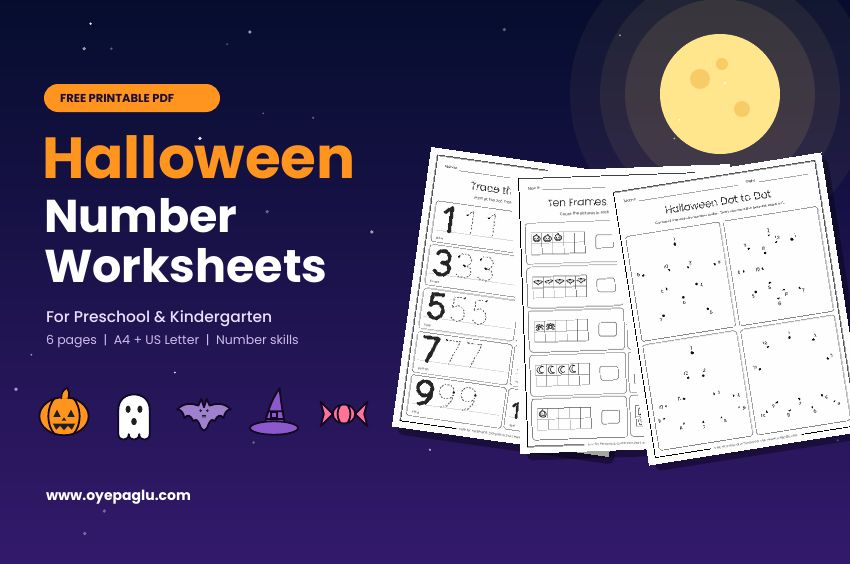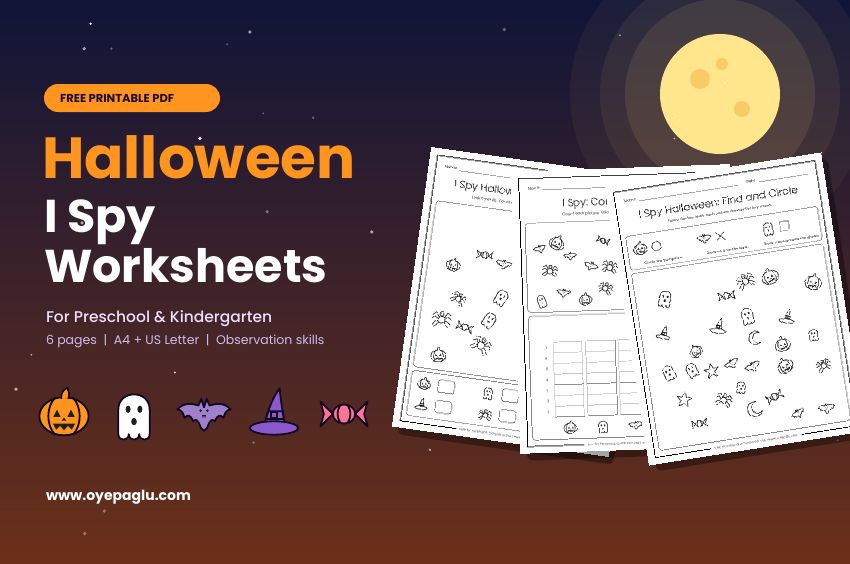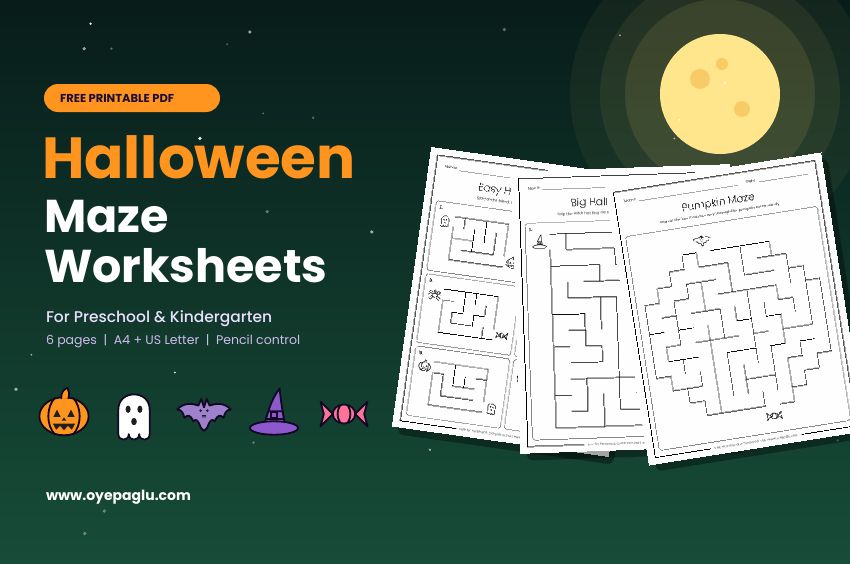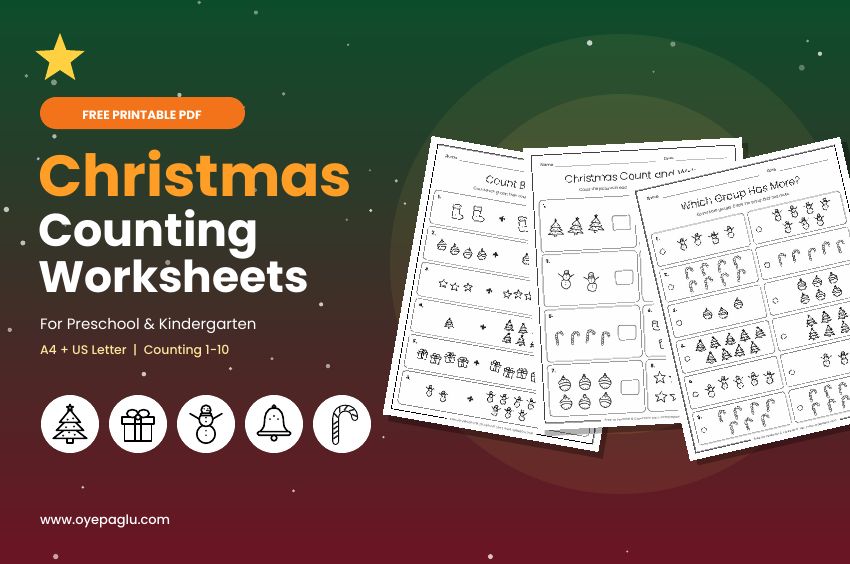
December is when counting practice gets easy to sell. A kid who groans at a plain number sheet will happily count candy canes. These Christmas counting worksheets use trees, gifts, snowmen, bells, stockings and stars, and each page asks for something a little different: writing, circling, matching, coloring, drawing, comparing, adding and filling in missing numbers.
Every page is black and white with thin lines, so it won’t eat your ink. Download the US Letter or A4 version, print at 100%, and you’re done.
Free Christmas Counting Worksheets (PDF)
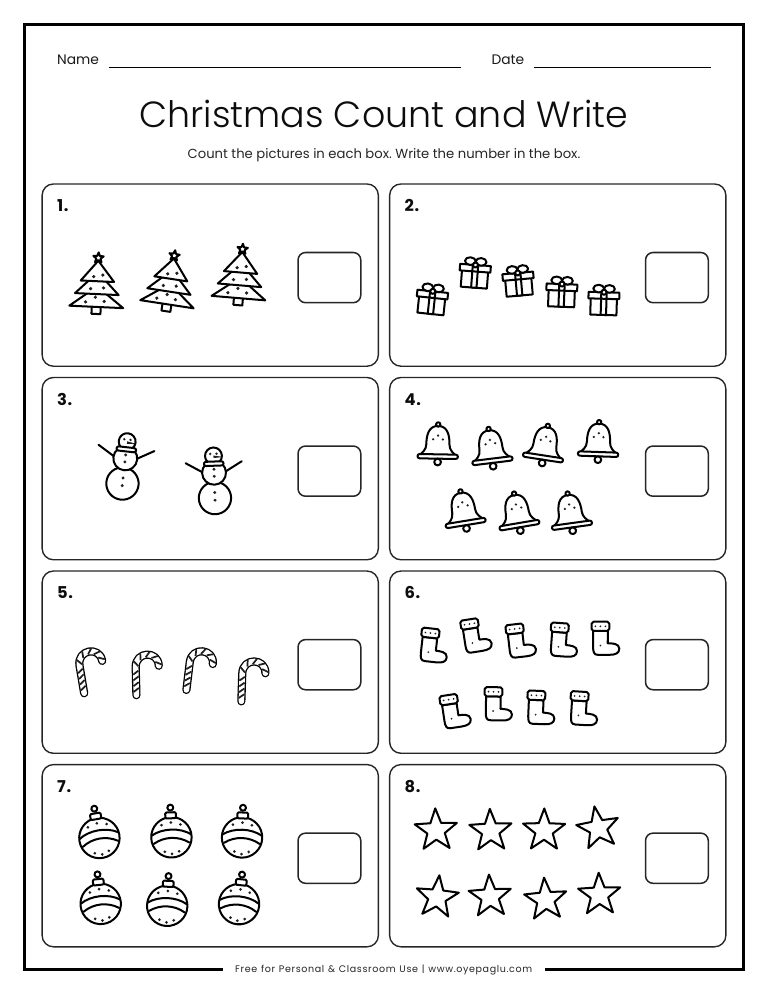
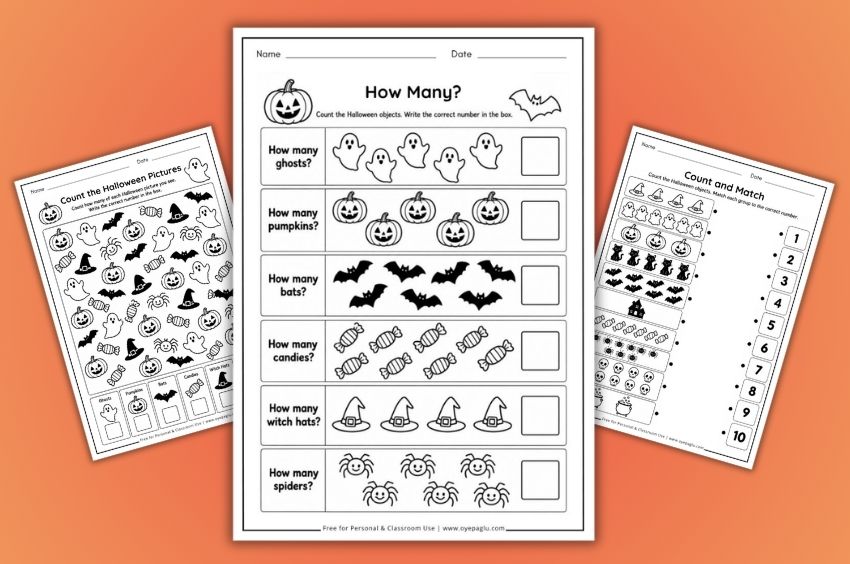
Eight boxes, each with a small group of Christmas pictures. Kids count them and write the number in the answer box. Numbers run from 2 to 9.
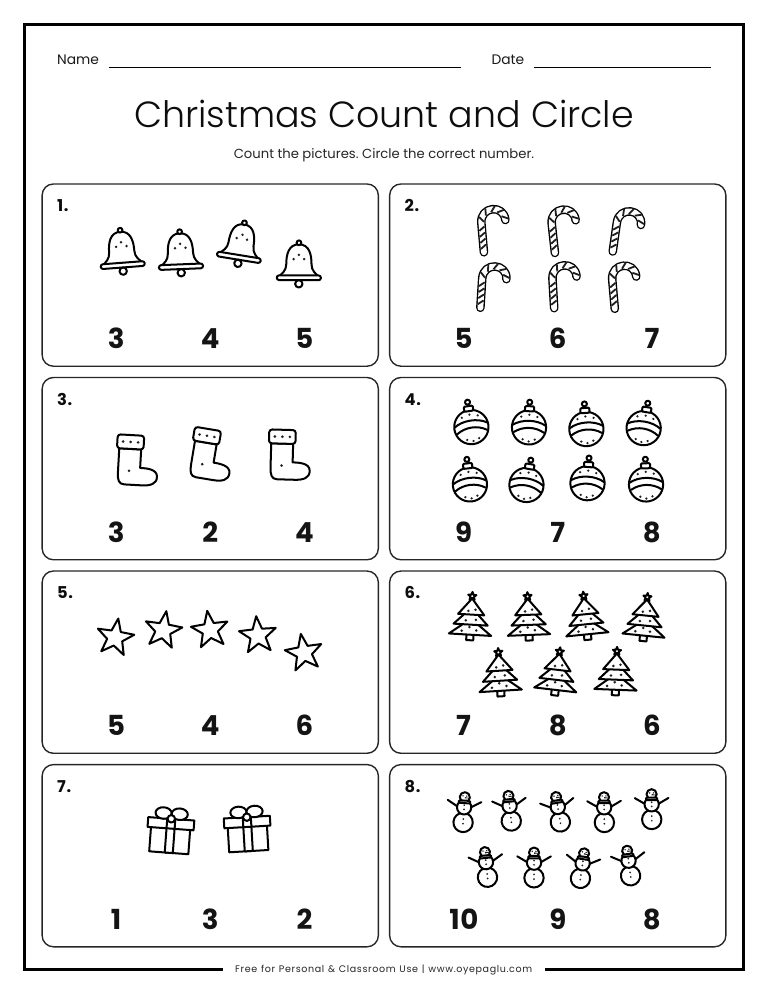
Count the group, then pick the right number from three choices. The choices sit one apart, so kids really have to count instead of guess.
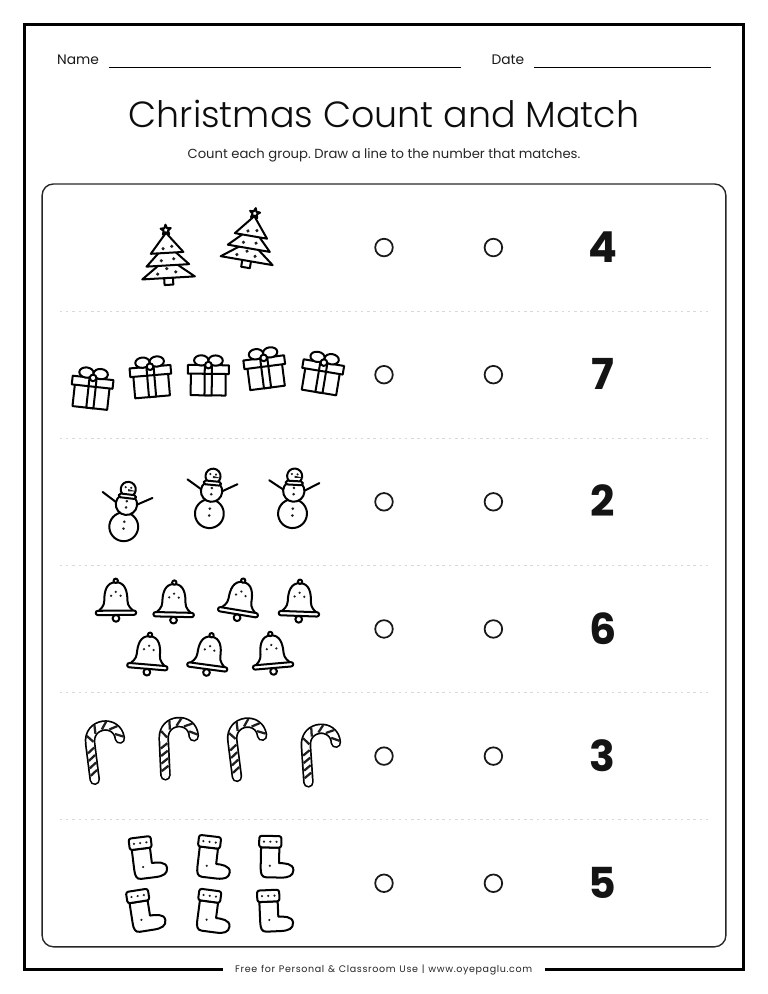
Six groups on the left, six numerals on the right. Kids count, then draw a line across the page. Good pencil control practice too.
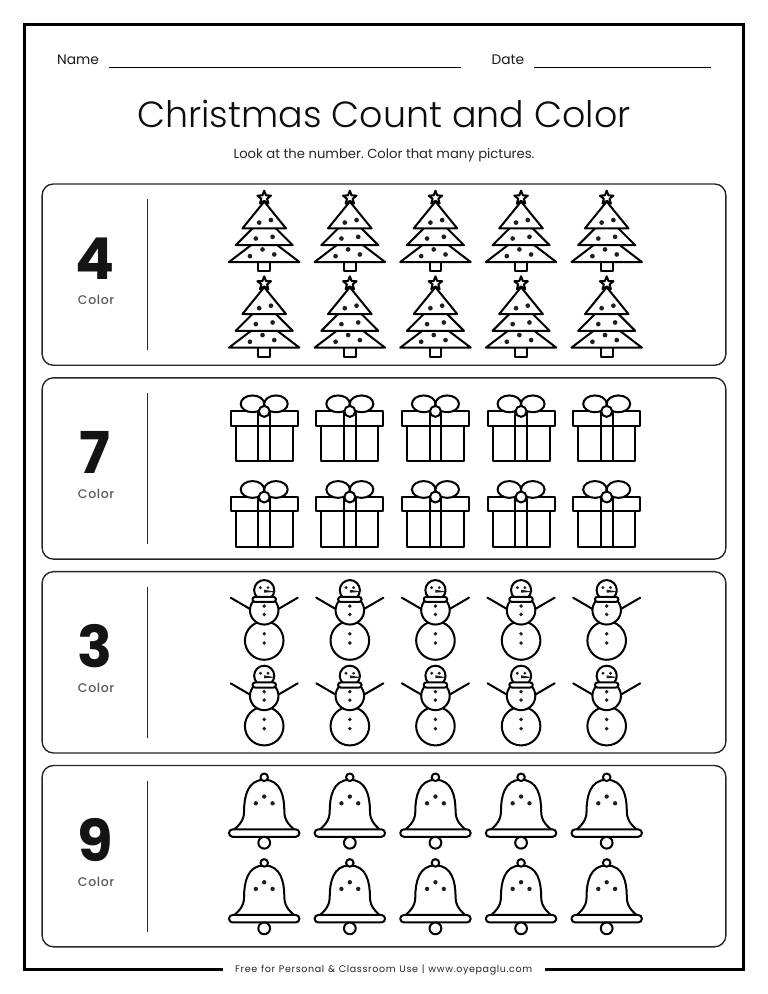
A big number on the left tells kids how many of the ten big pictures to color. Stops at the right number, which is harder than it sounds.
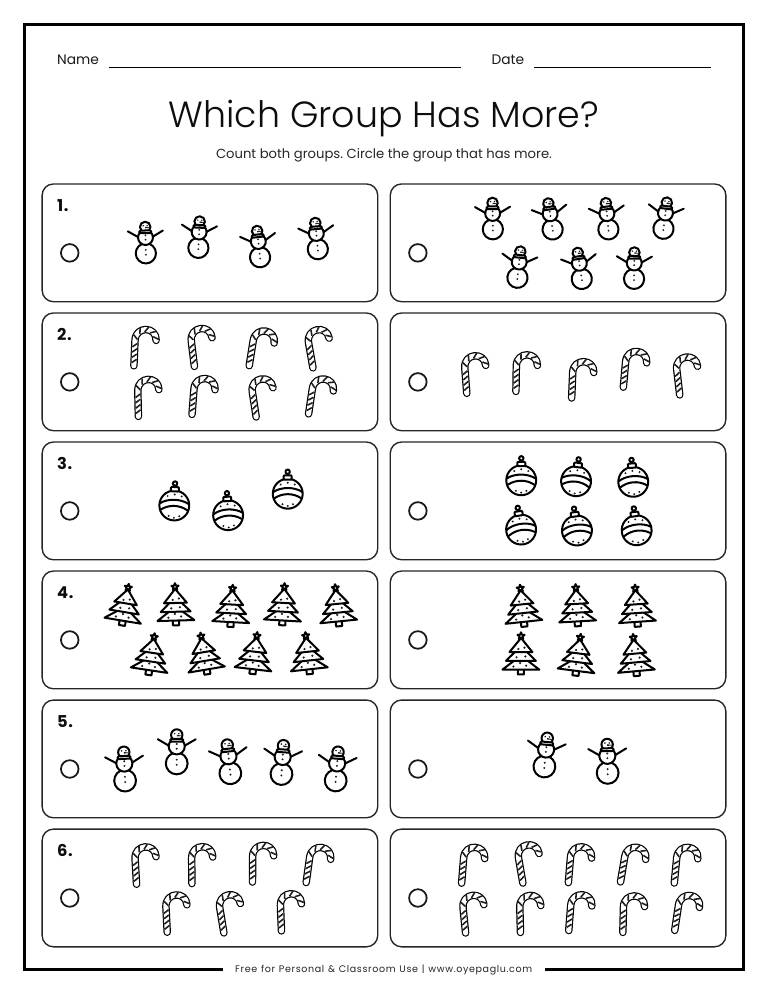
Two groups side by side. Count both and circle the bigger one. A first step toward comparing numbers.
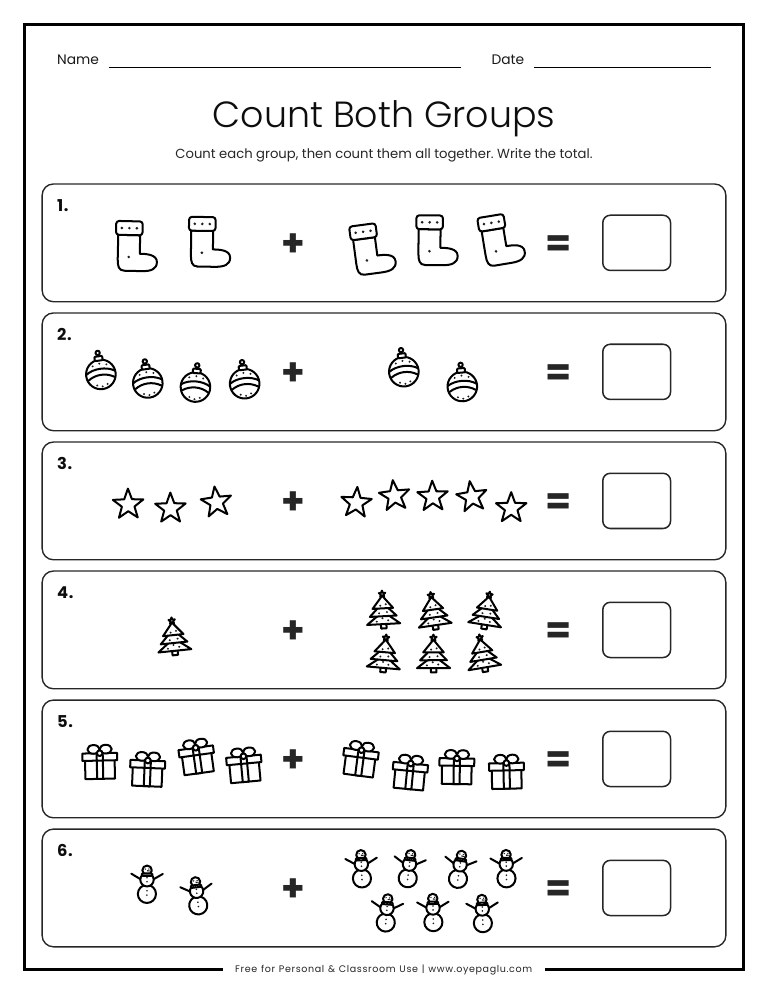
Count the first group, count the second, then write how many there are all together. Early addition without a single plus-sign lecture.
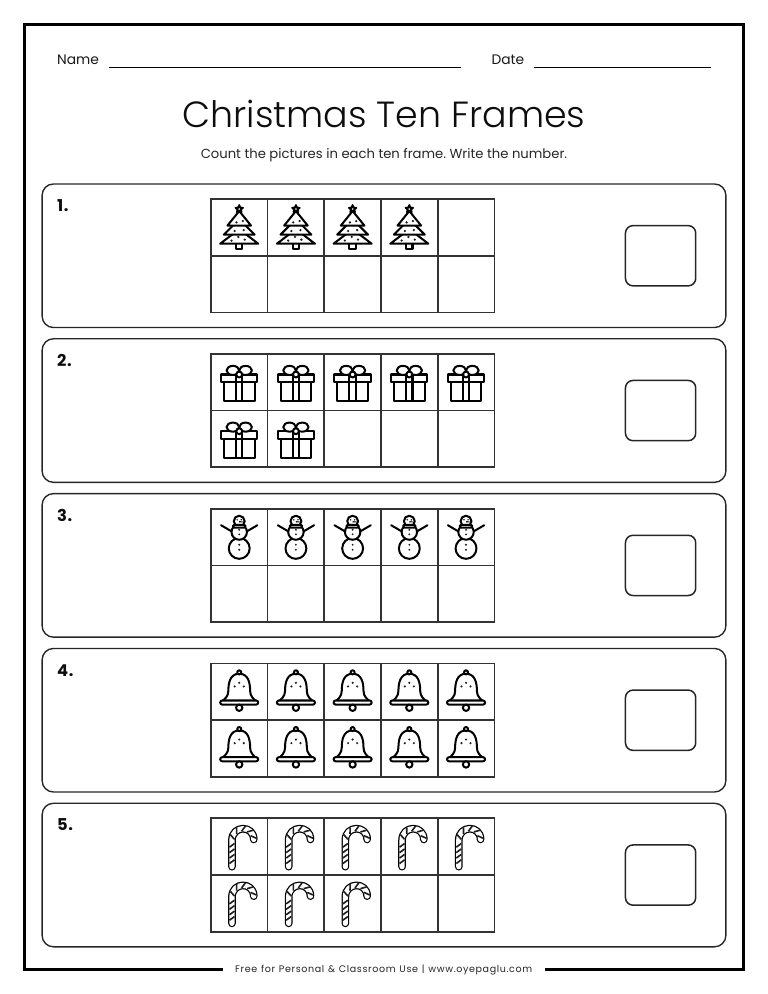
Pictures fill a ten frame and kids write how many. Ten frames build the picture of 5 and 10 that later makes addition easy.
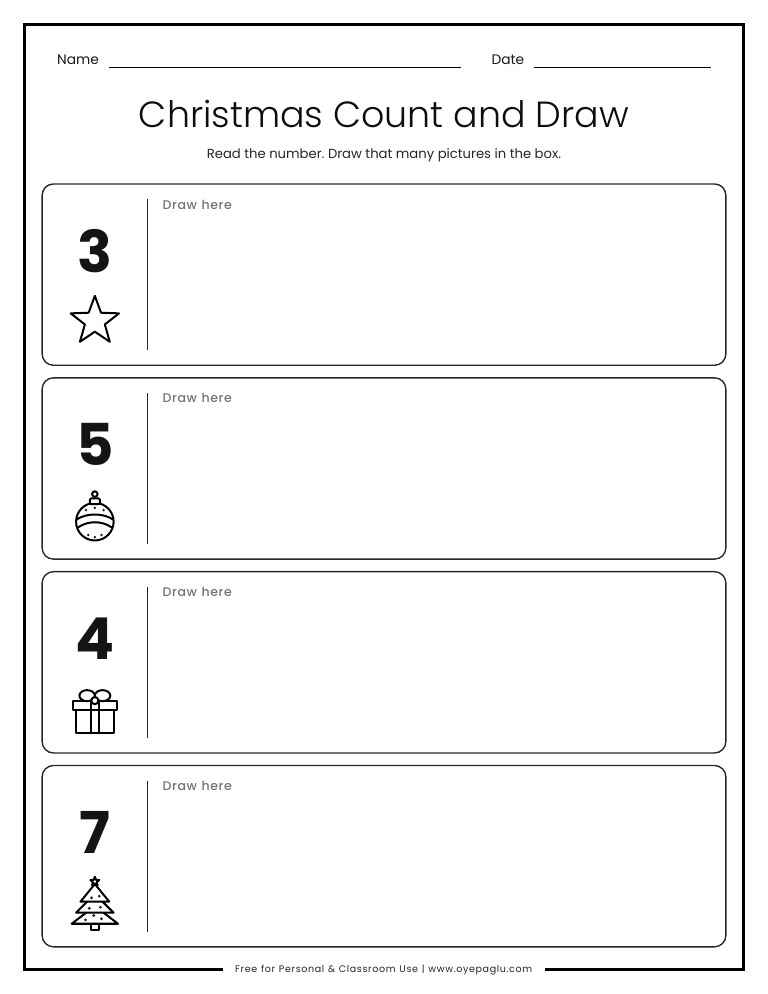
The reverse of counting: kids see a number and draw that many pictures in the box. Simple shapes are fine. A star, a circle, a square.
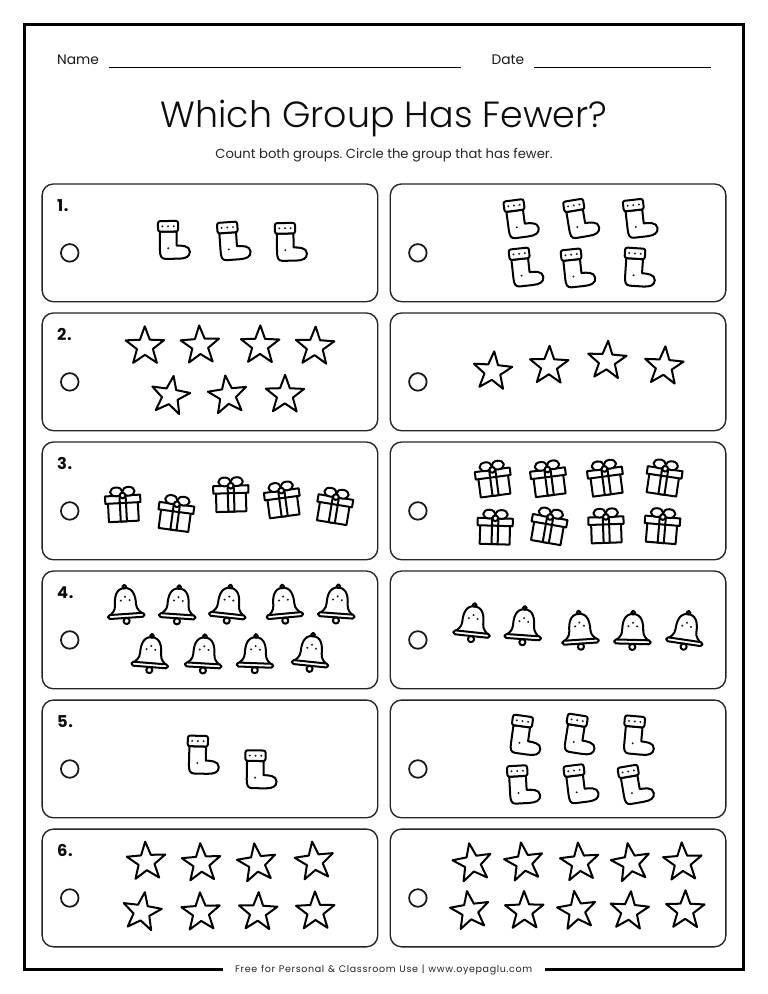
The mirror of the “more” page. Kids count both groups and circle the smaller one. Many kids find “fewer” trickier than “more”.
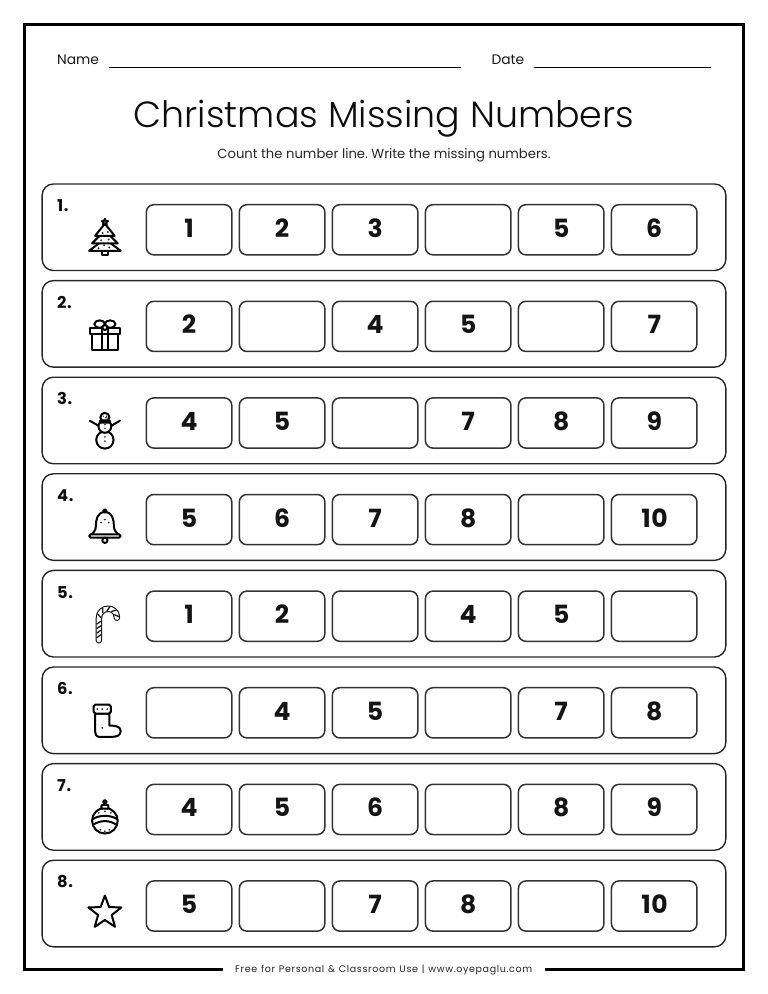
Number strips from 1 to 10 with gaps to fill in. Builds number order and the habit of counting forward.
What’s in this set
Every page comes in both A4 and US Letter. Numbers stay between 1 and 10 because that’s where most preschoolers and kindergartners are still building confidence. The pictures are jumbled on purpose, not lined up in neat rows. Lined-up pictures are easy to count by pointing; scattered ones teach kids to keep track of what they’ve already counted.
Skills your child practises
- One-to-one counting: touching each picture once, saying one number.
- Number writing: forming digits in the answer boxes.
- Comparing groups: more, fewer, or the same.
- Ten frames and number order: seeing 5 and 10 as shapes, and counting forward.
- Early addition: joining two small groups and finding the total.
Which page first?
Start with Count and Circle if your child is still unsure, since the answer is right there in front of them. Count and Write, Count and Match and Ten Frames come next. Save the comparing pages, Count Both Groups and Missing Numbers for kids who already count to 10 without help.
Frequently asked questions
What age are these for?
Roughly ages 3 to 6. Preschoolers do best with the first few pages (count and write, circle, match, color). Kindergartners can take on the comparing, adding and missing-number pages.
Are they really free?
Yes, for home and classroom use. Just don’t sell or re-host the PDFs.
Which size should I download?
US Letter if you’re in the US or Canada, A4 almost everywhere else. Print at 100% / actual size, not “fit to page”.
Is there an answer key?
The pages are simple enough to check by counting together, which is half the point. If you’d like a printable key, leave a comment and I’ll add one.