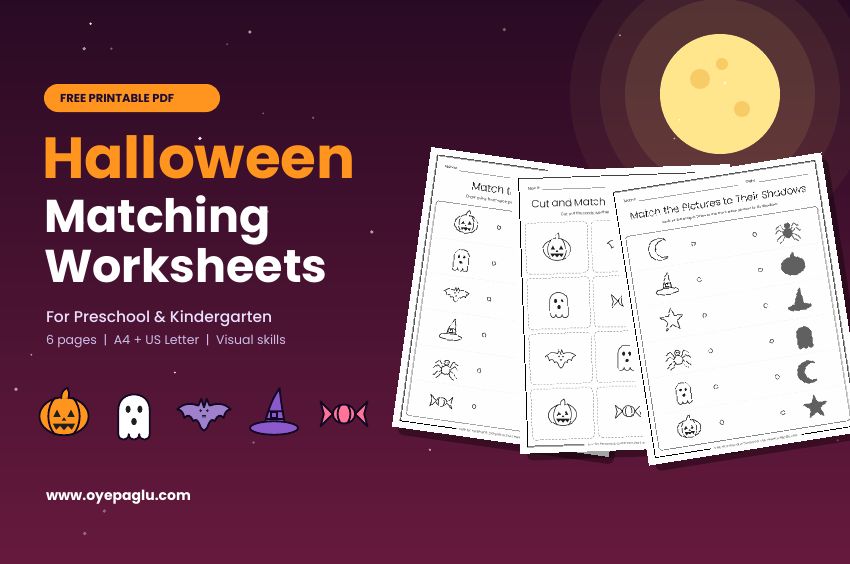
Matching looks like a simple game, but it teaches a lot. To join two pictures, a child has to look closely, notice small differences, hold the idea in mind, and then draw a steady line across the page. Those are the same habits they need for reading and writing later on.
These twelve free Christmas matching worksheets start with plain picture matching and slowly move on to shadows, halves, numbers, letters, words and shapes. Each page has the pictures on the far left and right edges with a wide empty space in between, so a small hand has plenty of room to draw a line. All pages are black and white with thin lines (the color page has just a few small circles), and each one comes as a US Letter and an A4 PDF.
Free Christmas Matching Worksheets (PDF)
Picture matching
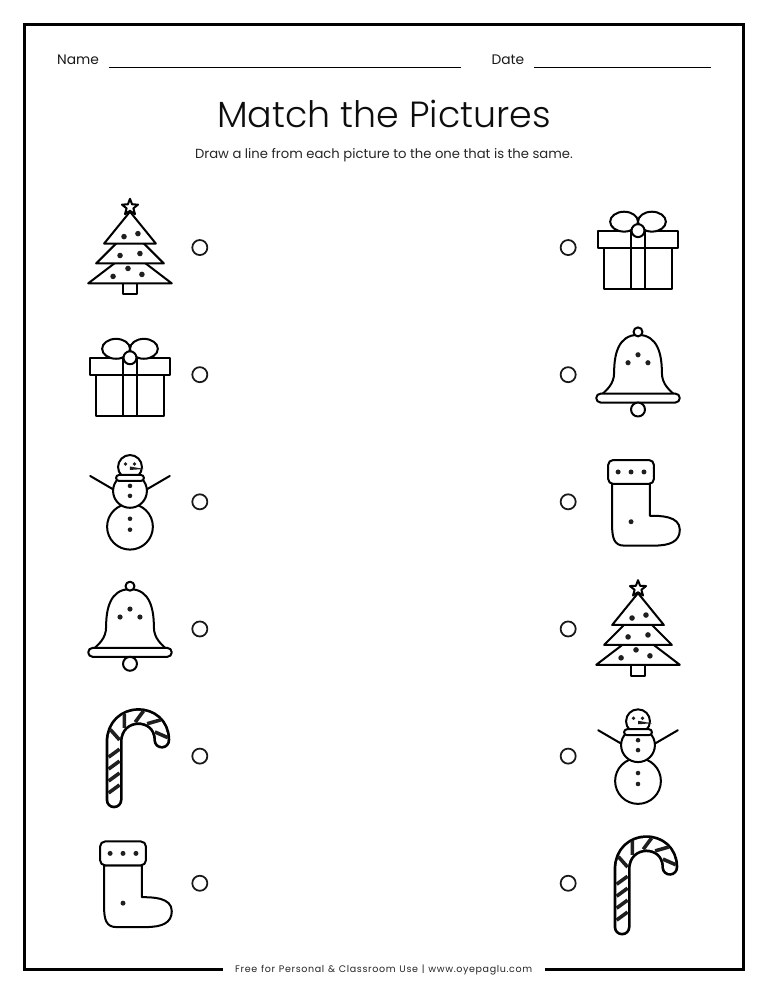
The classic first matching page. Join each picture to the same picture on the other side.
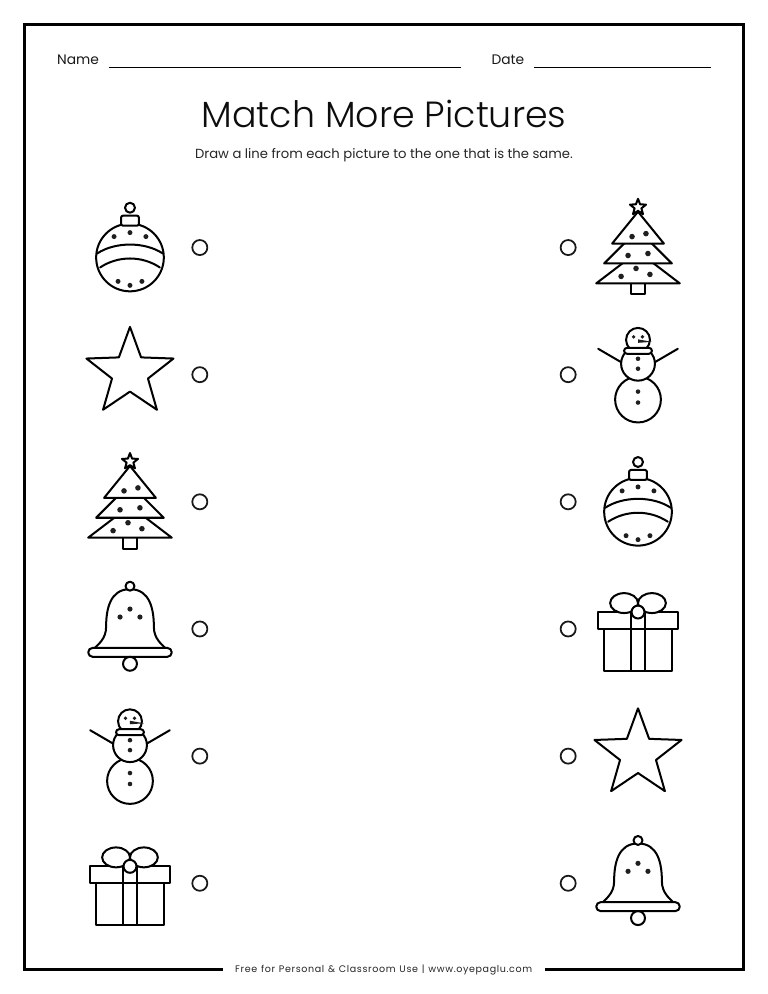
A second picture matching page with a different mix of Christmas pictures.
Shadow matching
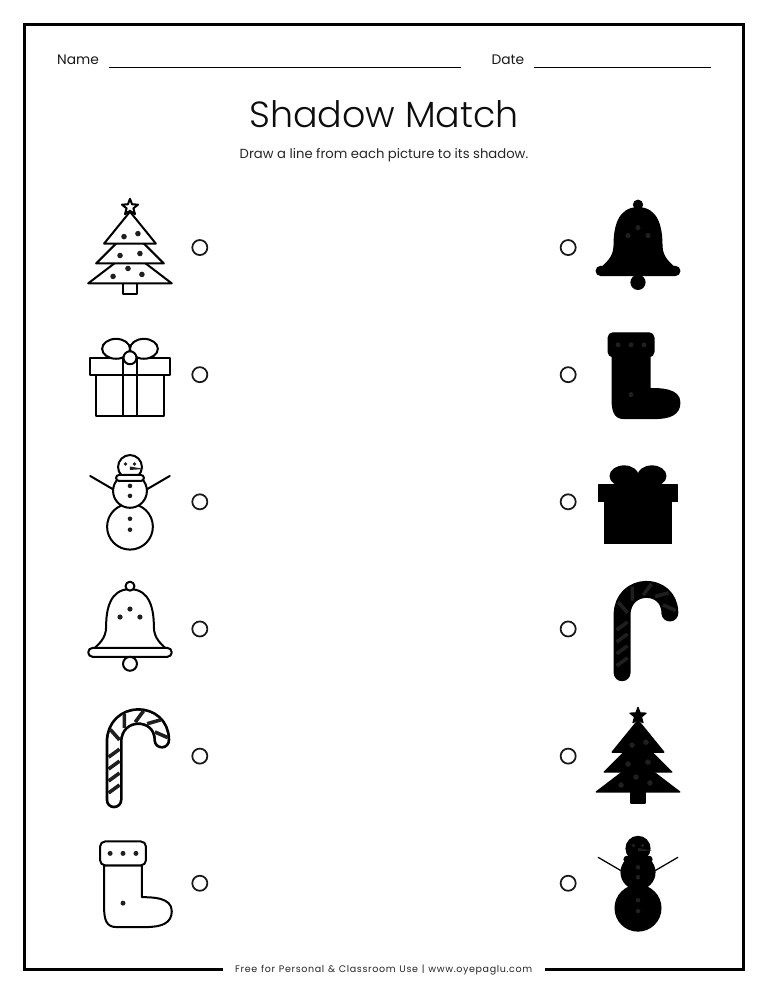
Join each picture to its black shadow. Kids have to look closely at the shape.
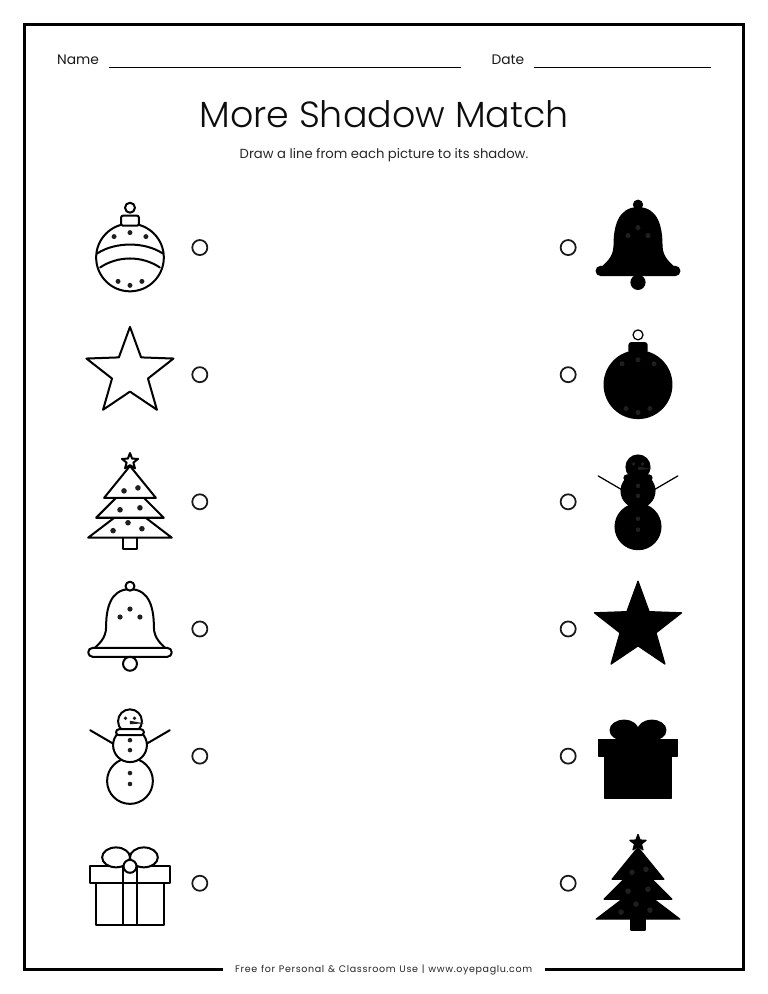
Another shadow page with new pictures, a little trickier than the first.
Size and halves
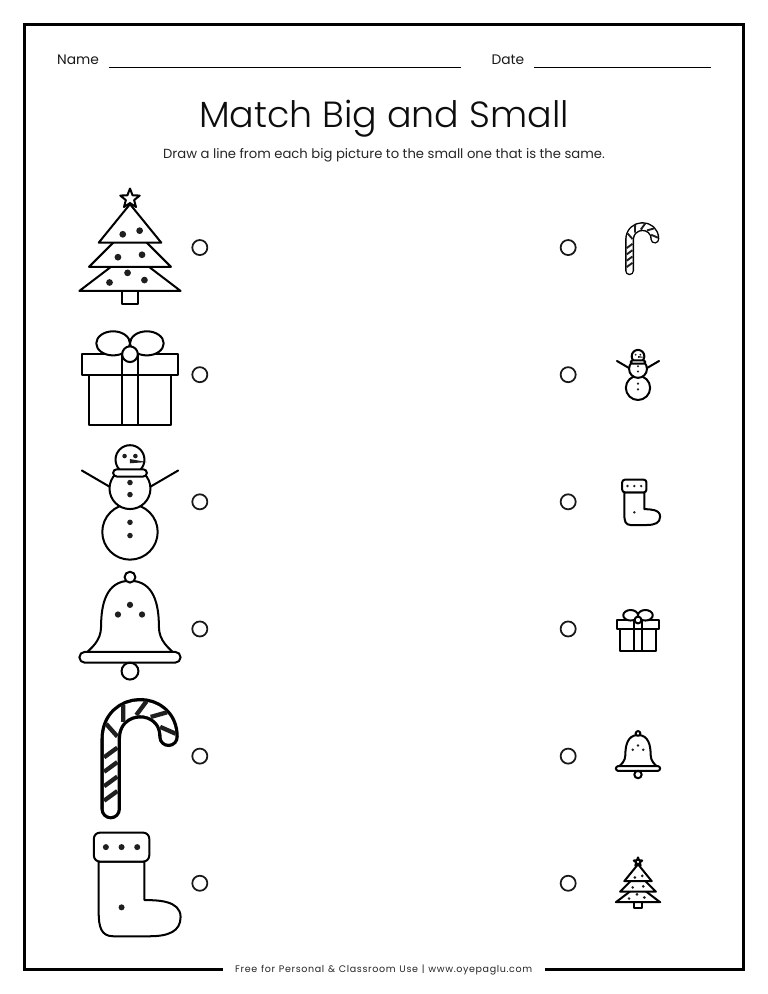
Match each big picture to the same picture in a small size. Practice with size.
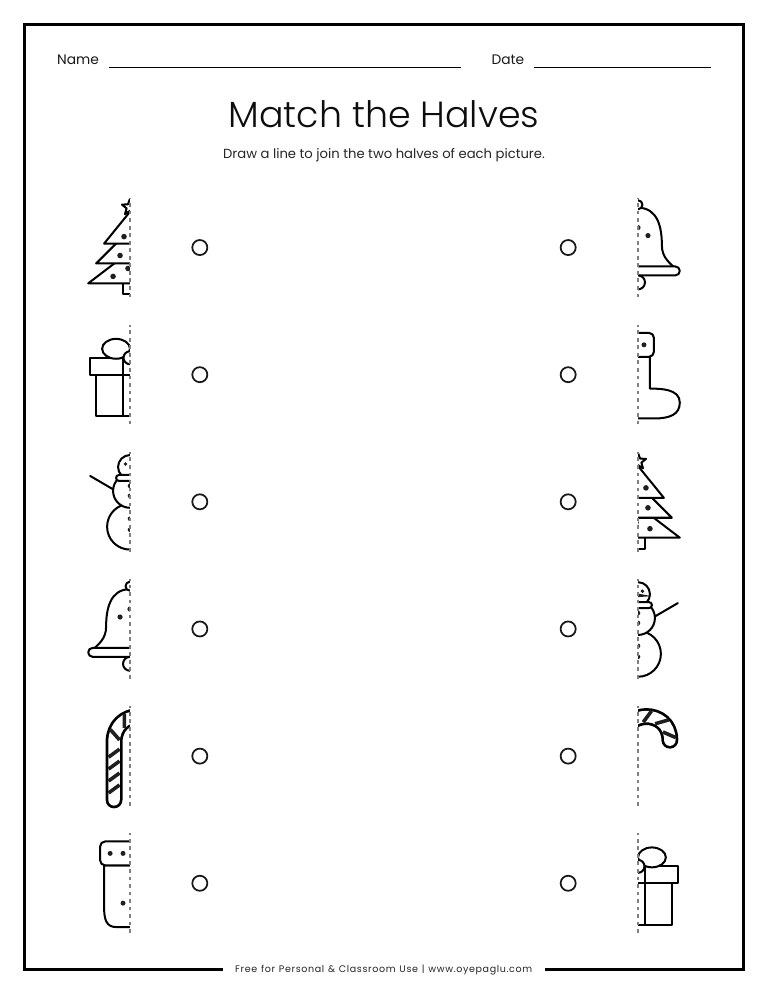
Each picture is cut in half. Kids join the left half to the right half.
Numbers, letters and words
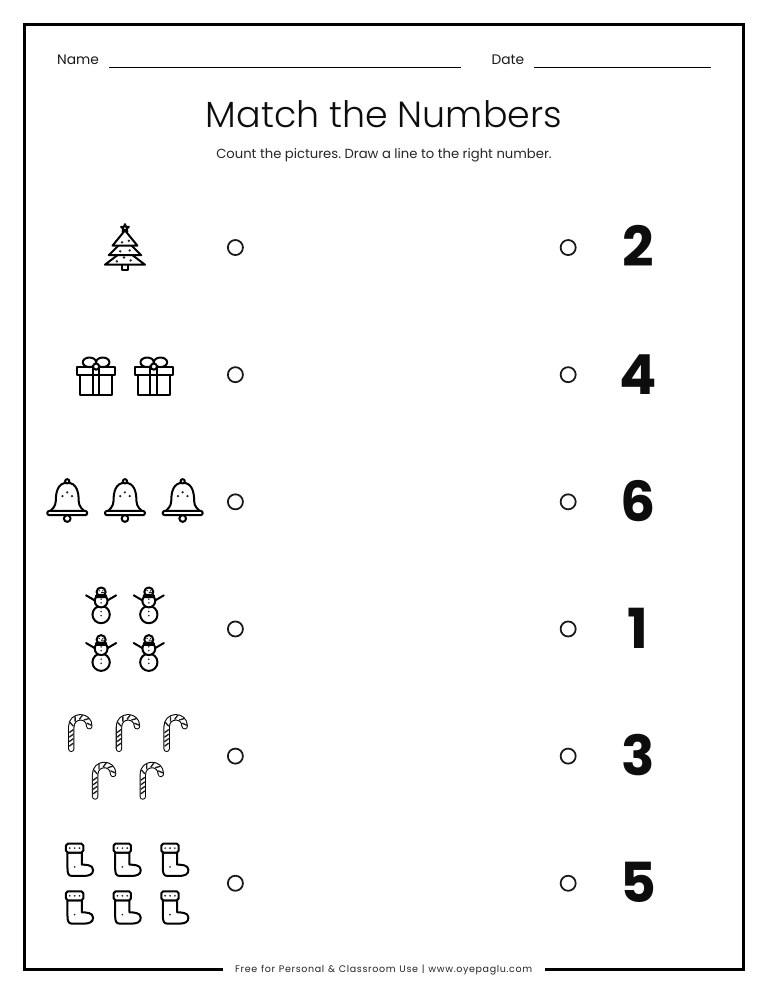
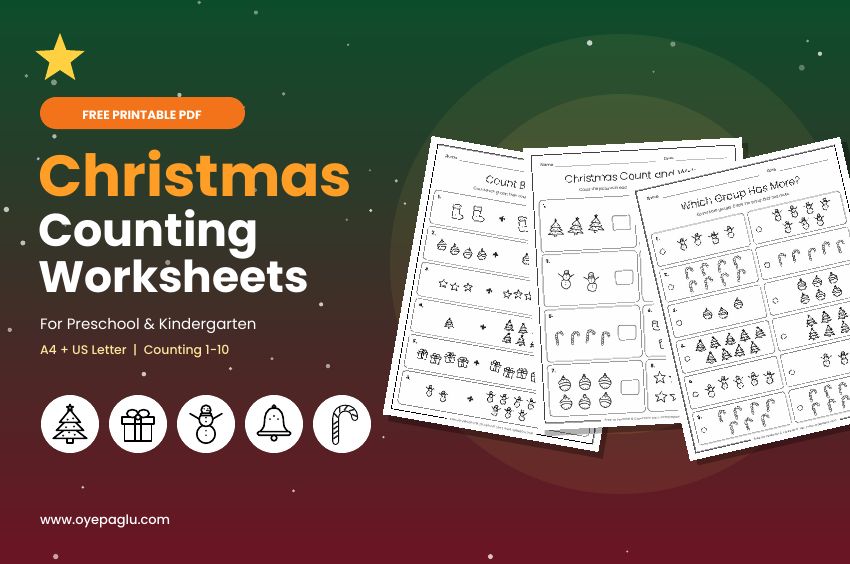
Count the Christmas pictures and join each group to its number from 1 to 6.
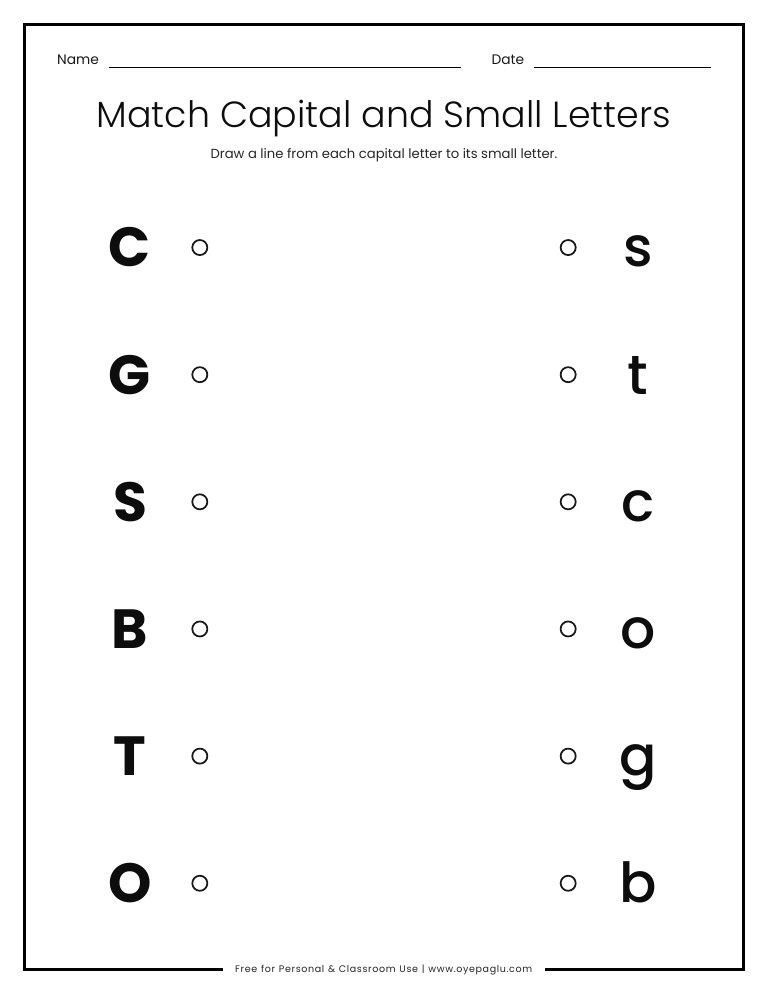
Join each capital letter to its small letter. Six pairs to start with.
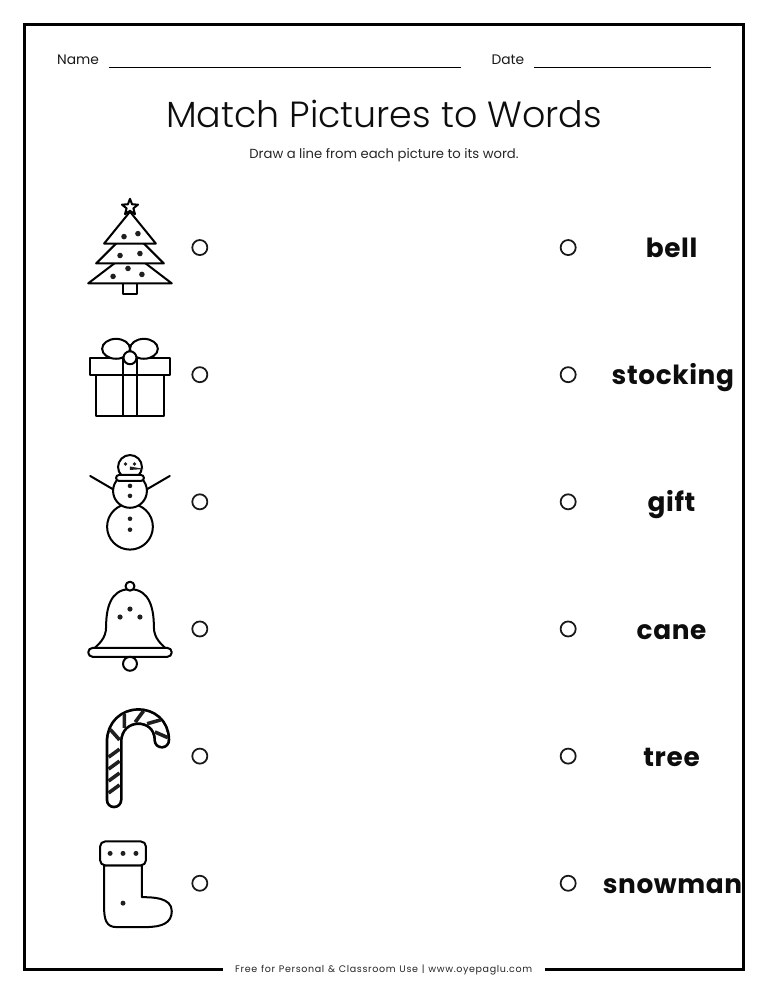
Join each picture to its word. A gentle step into early reading.
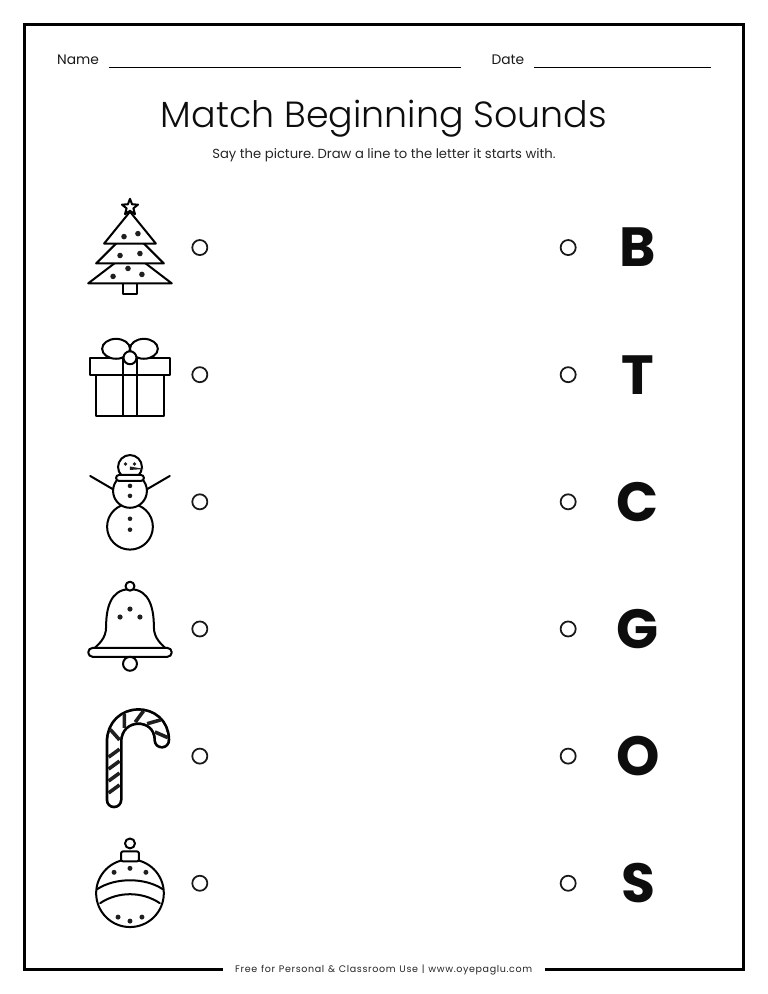
Say the picture, listen for the first sound, and join it to the letter.
Colors and shapes
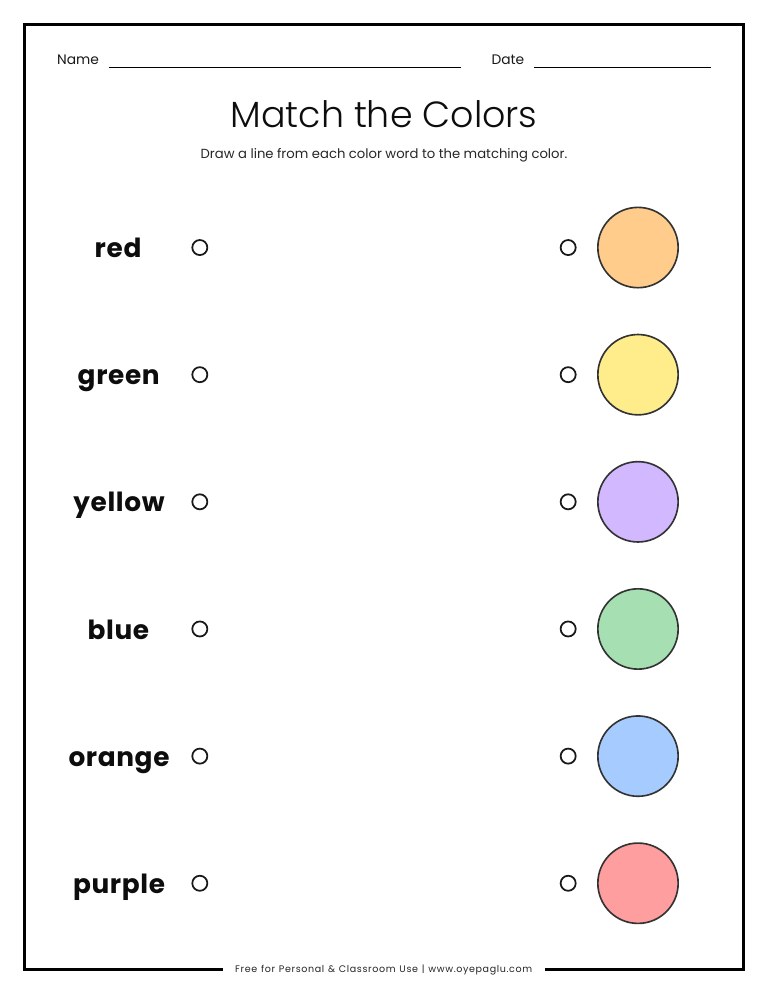
Join each color word to the circle of the same color. The only page with a little color in it.
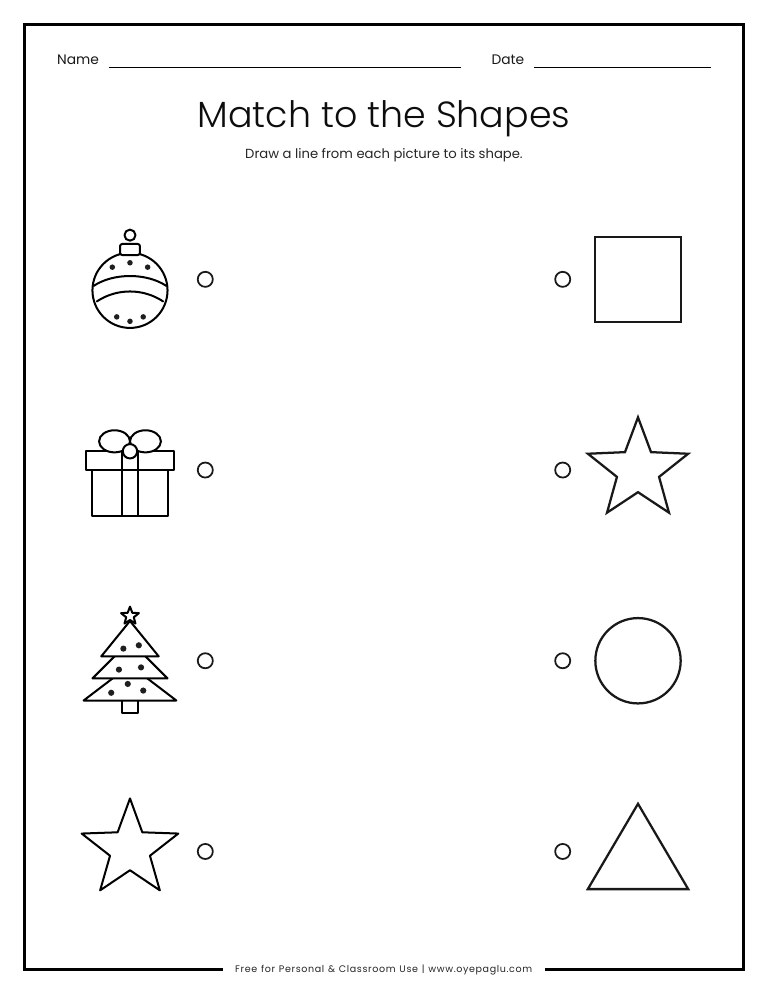
Join each Christmas picture to its shape: circle, square, triangle and star.
What do kids learn from matching worksheets?
- Visual discrimination. Telling a star from an ornament, or a bell from a stocking, is the same skill that later separates “b” from “d”.
- Pencil control. Drawing a long line from one side of the page to the other is real fine-motor practice.
- Early reading and math. The number, letter, word and sound pages connect pictures to symbols, which is how reading and counting begin.
Which page should my child start with?
Younger preschoolers (3 to 4 years) can begin with the first two picture pages and the shadow pages. Around age 4 to 5, try big and small, halves, numbers and shapes. For kindergarten children, the letter, word and beginning sound pages are a good fit.
Frequently asked questions
How do I print these worksheets?
Click the PDF button under any worksheet. Print at 100% (actual size) on regular paper. US Letter is for the US and Canada, A4 for almost everywhere else.
Are they really free?
Yes, for home and classroom use. Please don’t sell the PDFs or re-host them on other sites.
Can I use them for a classroom center?
Yes. Print a set, laminate the pages, and let children use dry-erase markers.