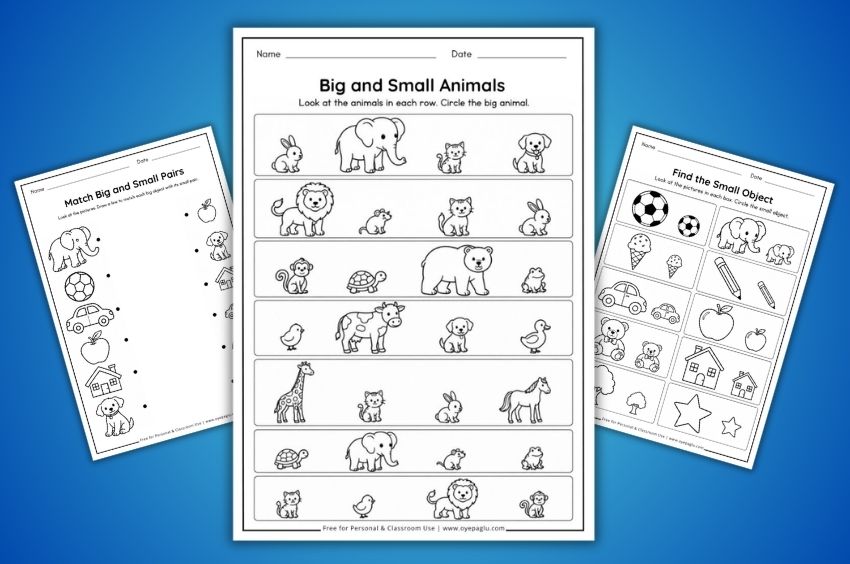
Learning about size is one of those early skills that looks simple but takes plenty of practice. Young children need time to notice the difference between big and small objects, compare what they see, and explain their choice. These free printable big and small worksheets give preschool and kindergarten children simple ways to practice size recognition at home or in the classroom.
Free Big and Small Worksheets
This printable set includes 9 different big and small activities. Each worksheet uses familiar pictures and simple directions, so children can focus on the size concept instead of trying to understand complicated instructions.
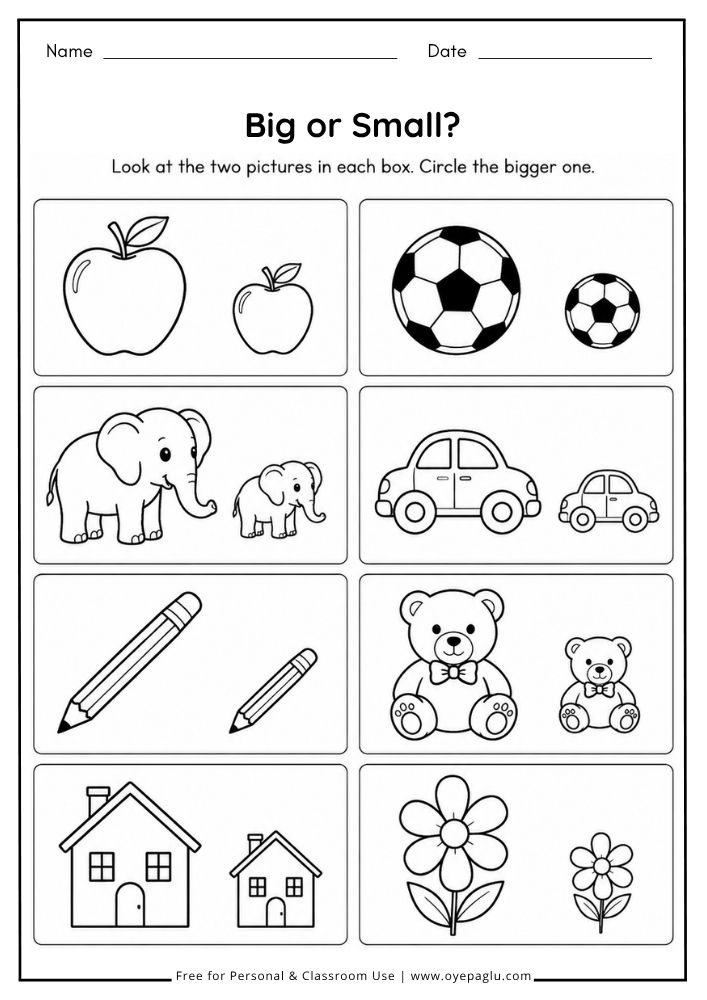
Big or Small?
The Big or Small? worksheet gives children a simple introduction to size comparison. They look at the pictures and decide whether each object is big or small.
This is a good starting activity for preschoolers who are just beginning to use size words. You can also ask children to explain their answers out loud.
Try questions such as:
“Which one is big?”
“Which one is small?”
“Can you find something big in the room?”
Simple conversations like these help connect the worksheet to the child’s everyday surroundings.
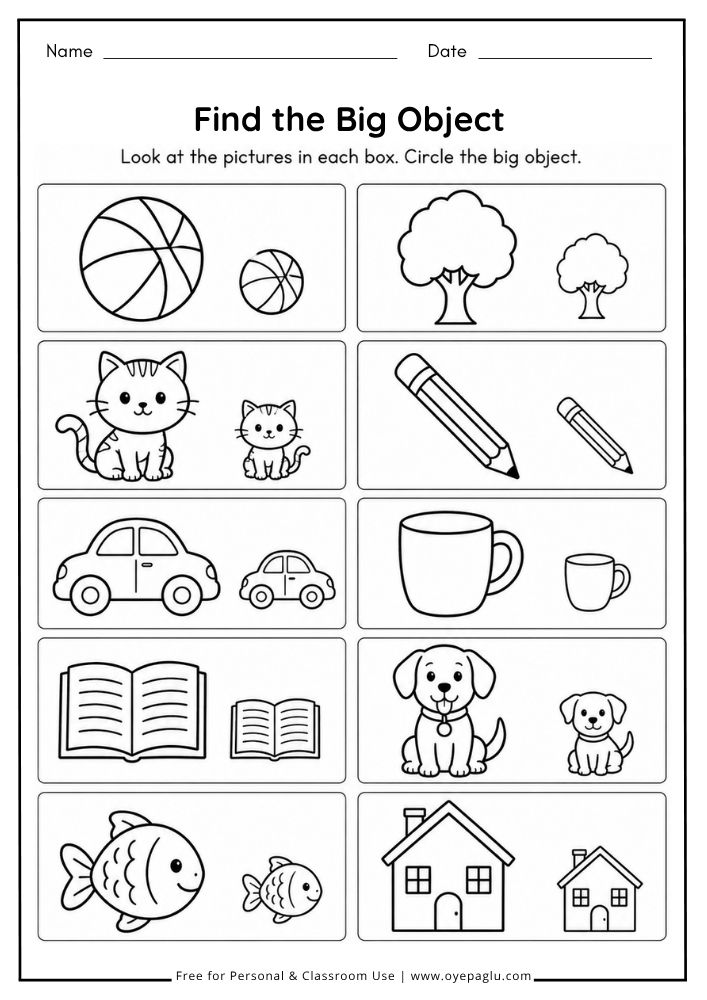
Find the Big Object
The Find the Big Object worksheet focuses only on identifying the larger object.
Children look at the choices and find the object that is bigger. This makes the activity easy to understand and gives young learners repeated practice with visual comparison.
It works well as a short independent activity once children understand what “big” means.
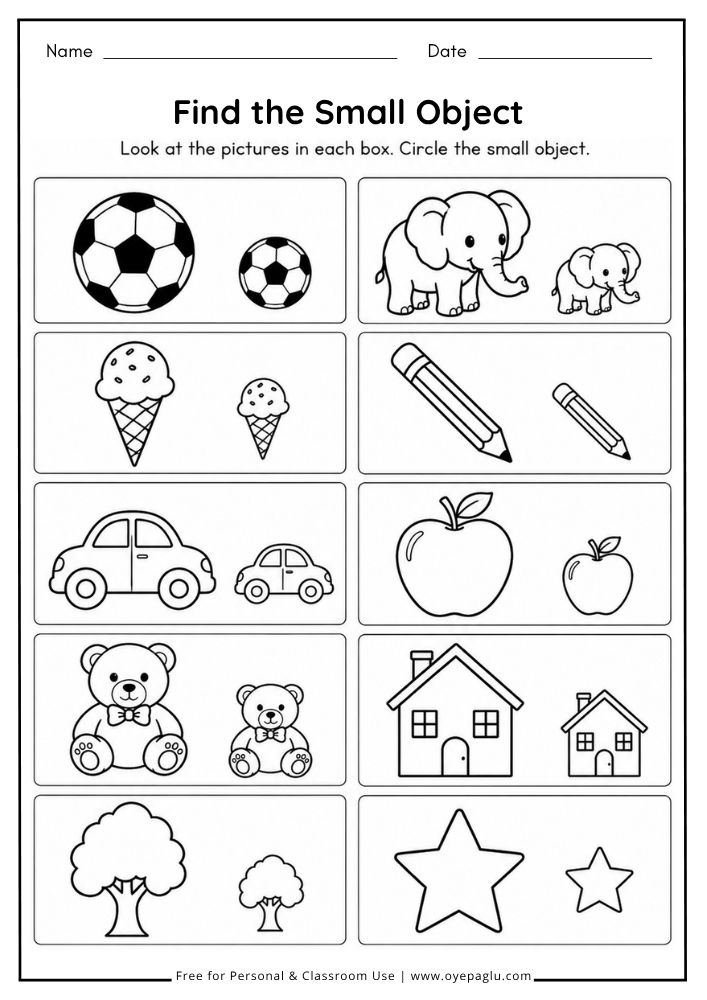
Find the Small Object
The Find the Small Object worksheet works in the opposite direction. Children look carefully at the pictures and identify the smaller object.
This is useful because some children can recognize “big” fairly quickly but still need more practice noticing smaller objects.
Give your child enough time to look before answering. There is no need to rush this skill.
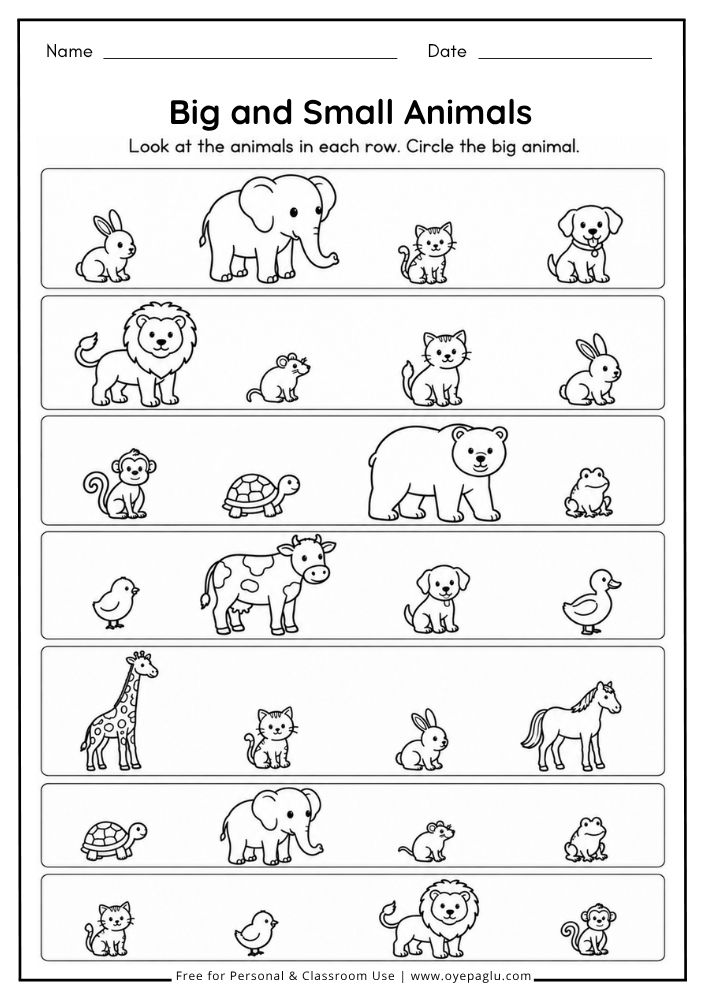
Big and Small Animals
Kids usually have an easy time getting interested when familiar animals are part of the activity.
The Big and Small Animals worksheet lets children compare animals by size. Pictures such as animals they already know can make the idea easier to understand.
You can extend the activity after the worksheet by asking:
“Which animal is bigger?”
“Which animal is smaller?”
“Can you name another big animal?”
This turns a short worksheet into a quick classroom or home conversation.
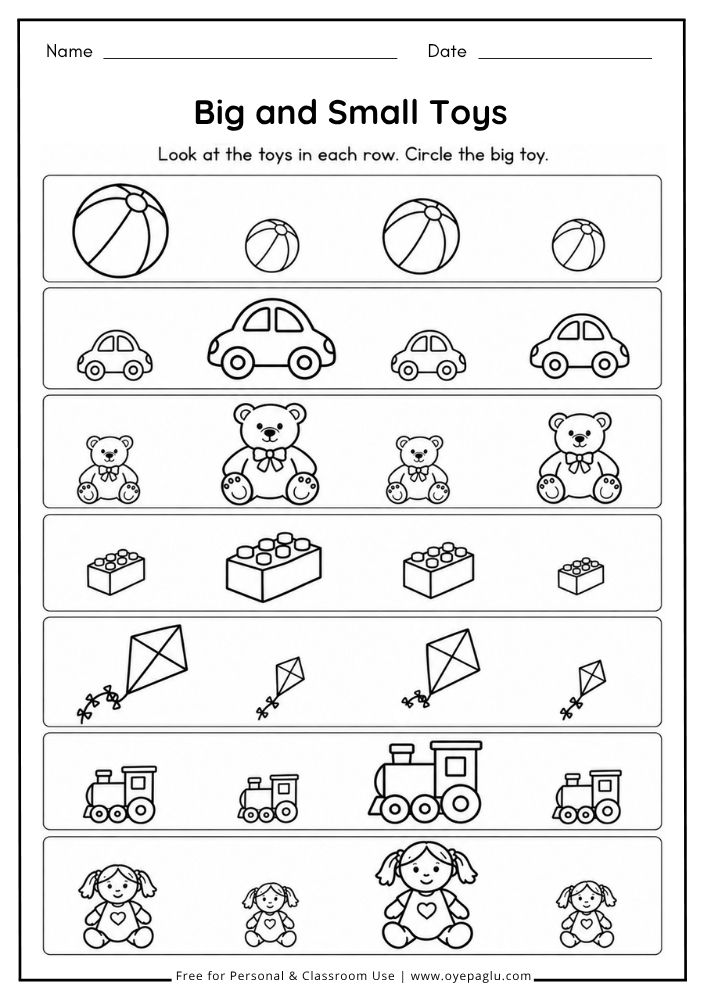
Big and Small Toys
The Big and Small Toys worksheet uses familiar play objects to practice size recognition.
This can be especially useful at home because children can continue the activity with their own toys. After finishing the page, place two toys on the floor and ask your child which one is bigger or smaller.
Hands-on practice can make the worksheet concept much easier to remember.
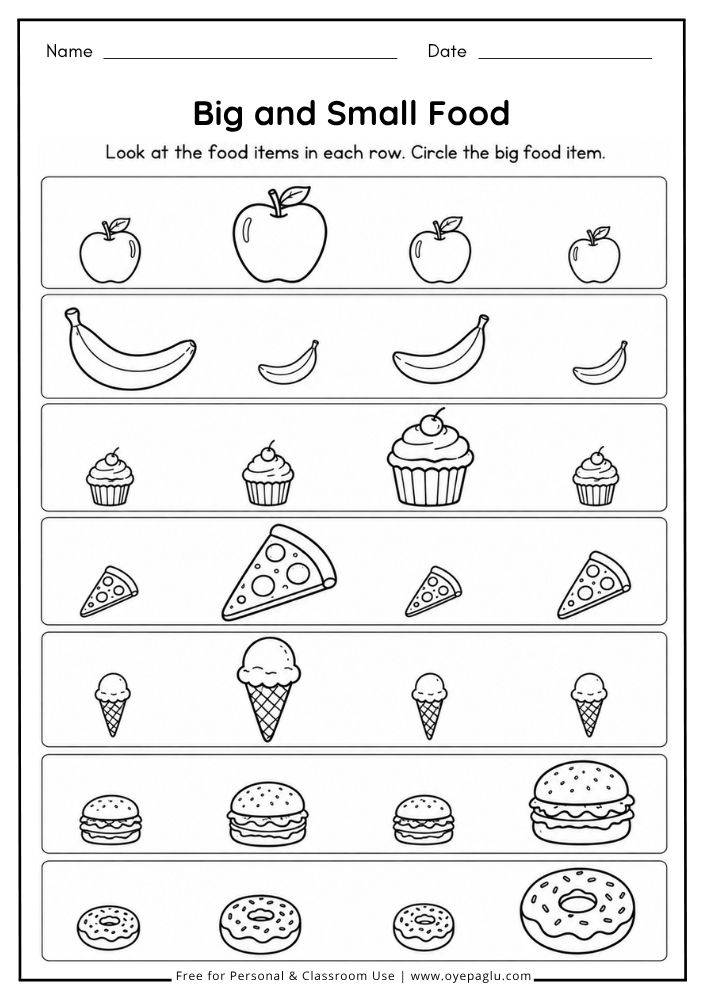
Big and Small Food
The Big and Small Food worksheet gives children another familiar group of objects to compare.
Food is something children see every day, so it provides an easy connection between the worksheet and real life. You can continue practicing during snack time by comparing two pieces of fruit or two other foods that are safe and appropriate to handle.
Keep the questions simple. The goal is to notice size, not to turn snack time into a lesson.
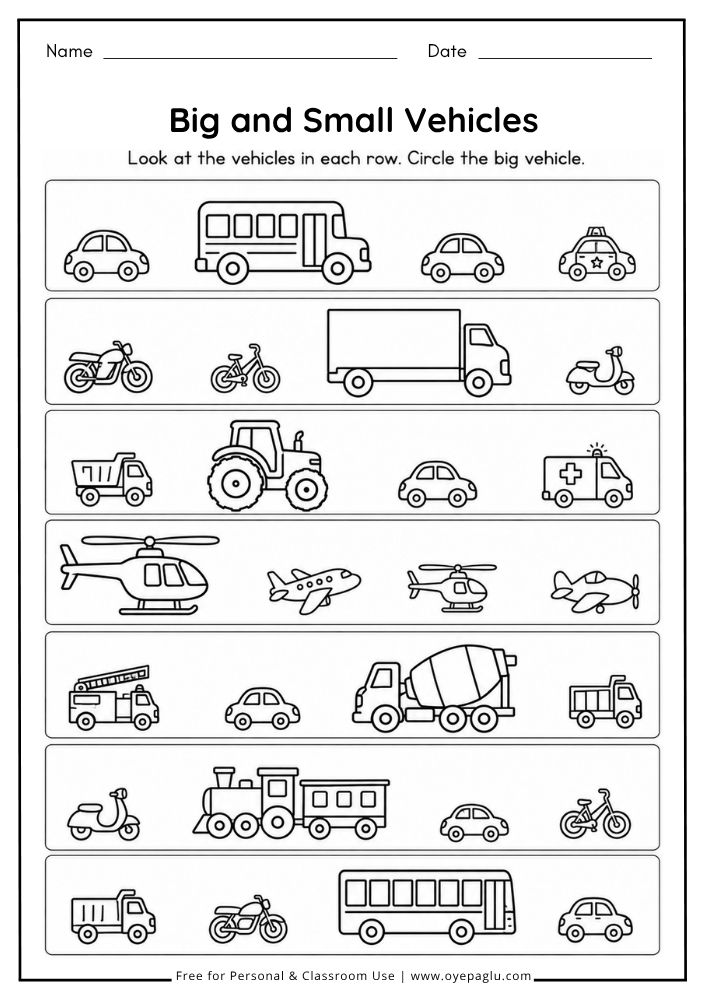
Big and Small Vehicles
The Big and Small Vehicles worksheet gives children practice comparing familiar types of transportation.
Children look at the vehicles and pay attention to their relative size. This can also lead to useful vocabulary practice because you can name each vehicle while talking about which one is bigger or smaller.
For young learners, combining familiar vocabulary with a visual comparison task can make the activity easier to follow.
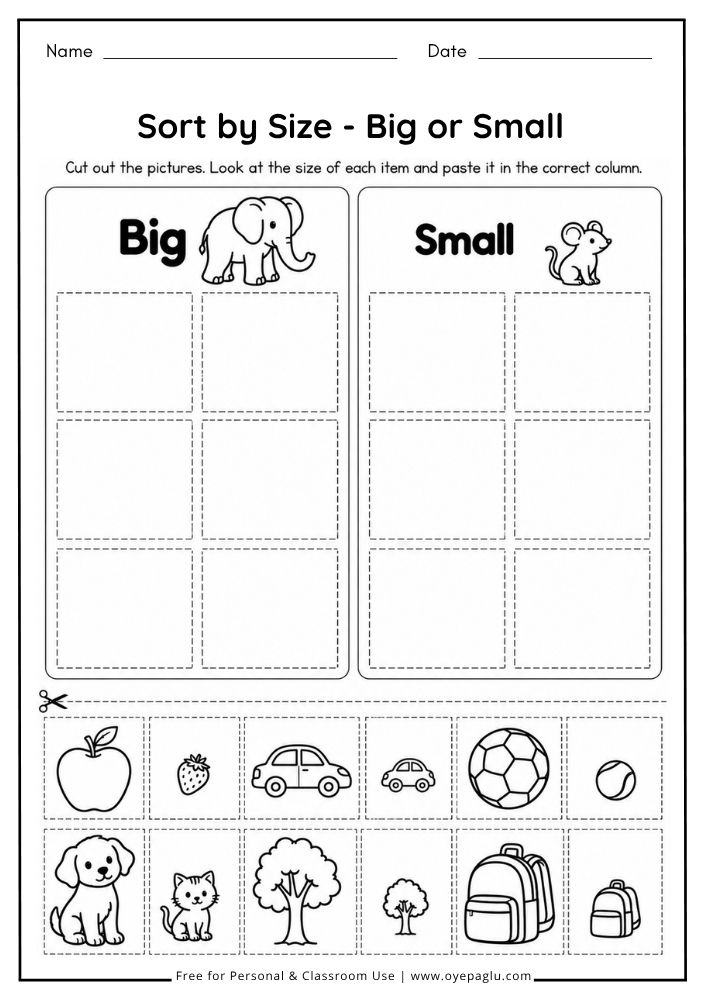
Sort by Size — Big or Small
The Sort by Size — Big or Small worksheet takes the skill one step further.
Instead of simply identifying one object, children practice deciding where objects belong based on size. Sorting is a useful early learning skill because children have to look at the pictures, compare them, and make a decision.
This worksheet can work well after children have already practiced basic big and small activities.
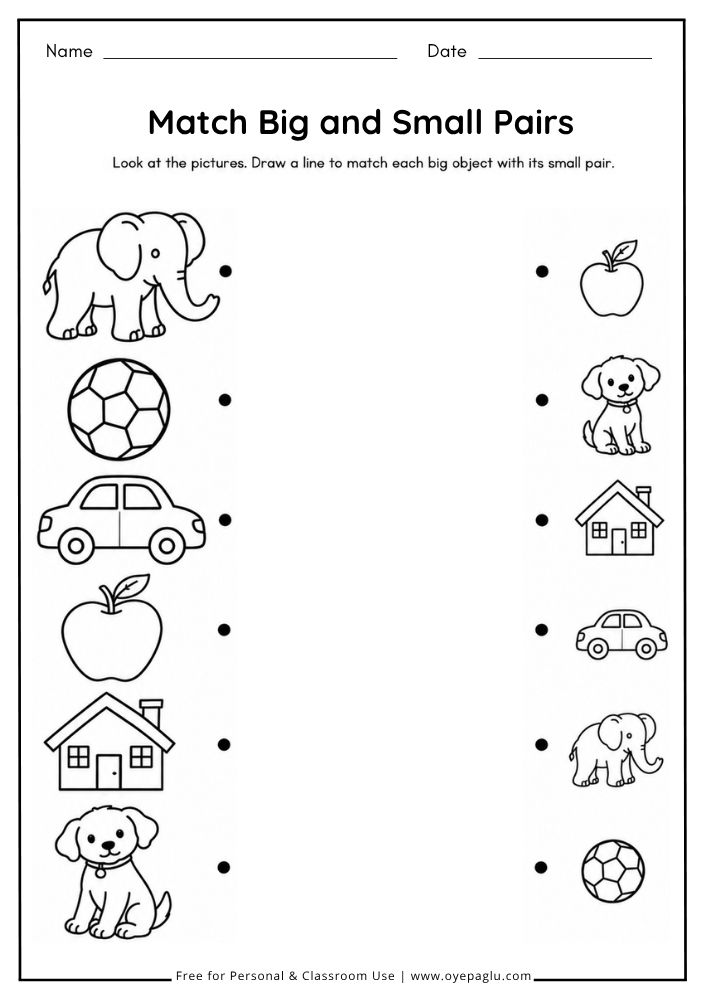
Match Big and Small Pairs
The Match Big and Small Pairs worksheet gives children a matching activity using objects that appear in both big and small sizes.
Children need to look at the pictures carefully and connect each big object with its small pair. Since the matching choices are not placed directly opposite their pairs, children need to pay attention rather than simply drawing straight across the page.
This makes it a nice activity for practicing both visual matching and size recognition.
Why Learning Big and Small Matters
Understanding size is more than learning two vocabulary words. It gives children practice with comparing objects and noticing differences.
A preschooler might naturally say that one toy is “big,” but classroom activities help turn that everyday observation into a more consistent skill.
These worksheets give children practice with:
- Size recognition: Children learn to identify whether objects are big or small.
- Visual discrimination: They look closely at pictures and notice differences in size.
- Comparison: Children compare two or more objects before making a choice.
- Following directions: Simple worksheet instructions help children practice listening and working independently.
- Early math thinking: Comparing and sorting objects by size introduces an important early math concept.
- Fine motor practice: Marking answers, circling choices, or drawing matching lines gives young hands useful pencil practice.
How to Use Big and Small Worksheets at Home
You do not need a long lesson for these activities. A few minutes of focused practice can be enough for a preschooler.
Start With Real Objects
Before handing over a worksheet, use two familiar objects.
Place a large toy beside a smaller one and ask, “Which one is big?”
Then switch them around.
This gives children a real-world example before they work with pictures.
Use One Worksheet at a Time
There is no need to print every page and finish the entire set in one sitting.
Choose one worksheet based on your child’s current skill. If your child is still learning the basic concept, start with Big or Small?, Find the Big Object, or Find the Small Object.
Once the idea is familiar, move on to sorting and matching.
Let Children Explain Their Answers
Instead of only asking whether an answer is right or wrong, ask your child to tell you what they noticed.
For example:
“I picked the truck because it is bigger.”
That short explanation gives you a better idea of whether the child understands the concept or is simply guessing.
Use the Pages for Quick Review
These worksheets also work well for a short review before moving on to another activity.
A five- or ten-minute practice session can fit easily into a homeschool morning, after-school routine, or preschool learning time.
How to Use These Printables in the Classroom or at Home
Morning Work
Place a worksheet at each child’s seat as a simple morning activity. Children can begin working while the teacher gets the classroom ready for the day.
Math Centers
Add the worksheets to a size-comparison center along with a few classroom objects. Children can compare the objects first and then complete the printable.
Laminated Practice
If you want to reuse the pages, laminate them or place them inside a dry-erase pocket. Children can use dry-erase markers and wipe the page clean when finished.
This is especially handy for preschool classrooms where the same basic skill may need repeated practice.
Homeschool Practice
Choose one page for a short homeschool lesson. After completing it, find similar examples around the house.
For example, compare a large book with a small book, or a large stuffed animal with a smaller one.
The worksheet becomes the starting point rather than the entire lesson.
Frequently Asked Questions
What age are these big and small worksheets for?
These worksheets are mainly suitable for preschool and kindergarten children. Some younger children may also enjoy the simpler pages with adult help, while older children can use them as quick review practice.
What skills do children practice with big and small worksheets?
Children practice size recognition, visual discrimination, comparison, sorting, matching, following directions, and early math thinking. Some activities also give children extra pencil-control practice.
Can I use these worksheets for classroom and homeschool activities?
Yes. They can be used for independent work, math centers, morning work, small-group practice, homeschool lessons, or quick review at home.
Final Thoughts
Learning to compare size takes practice, but it does not have to feel like a formal lesson. A few familiar pictures, simple questions, and real objects around the room can give children plenty of useful practice.
These free big and small worksheets for kids are designed to make that practice easy to fit into a preschool classroom, kindergarten routine, or homeschool day. Start with the simpler comparison pages and move toward sorting and matching as your child becomes more comfortable with the concept.