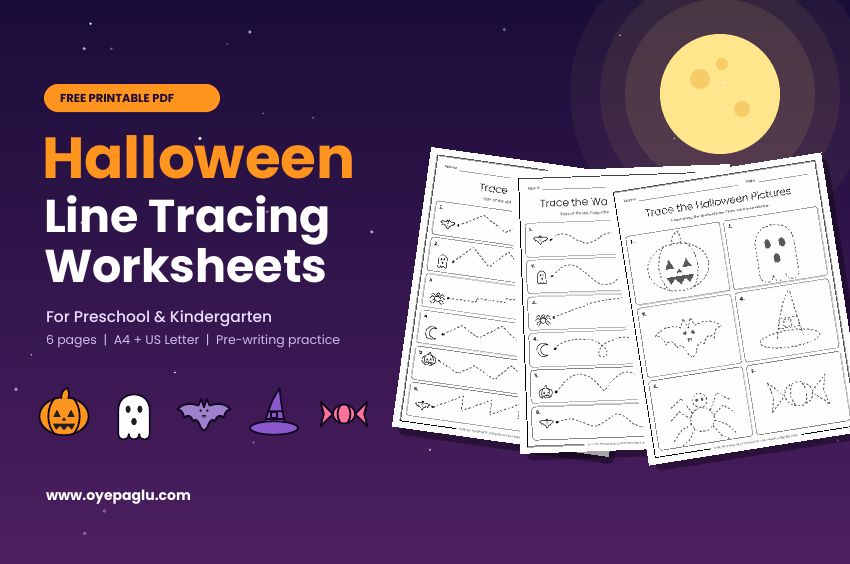
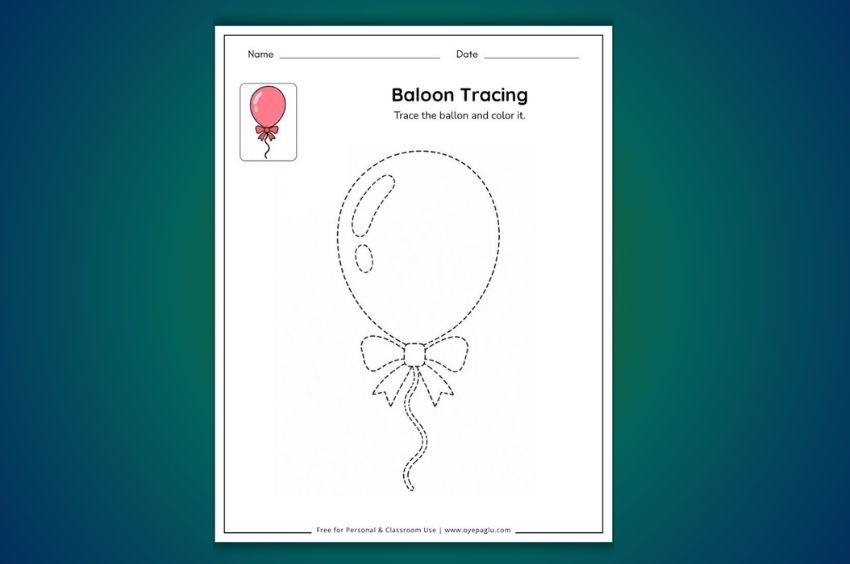
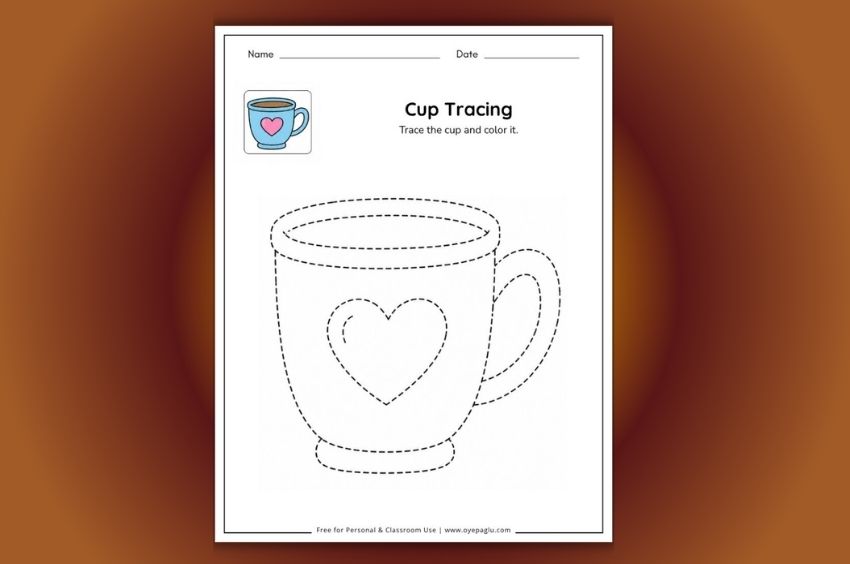
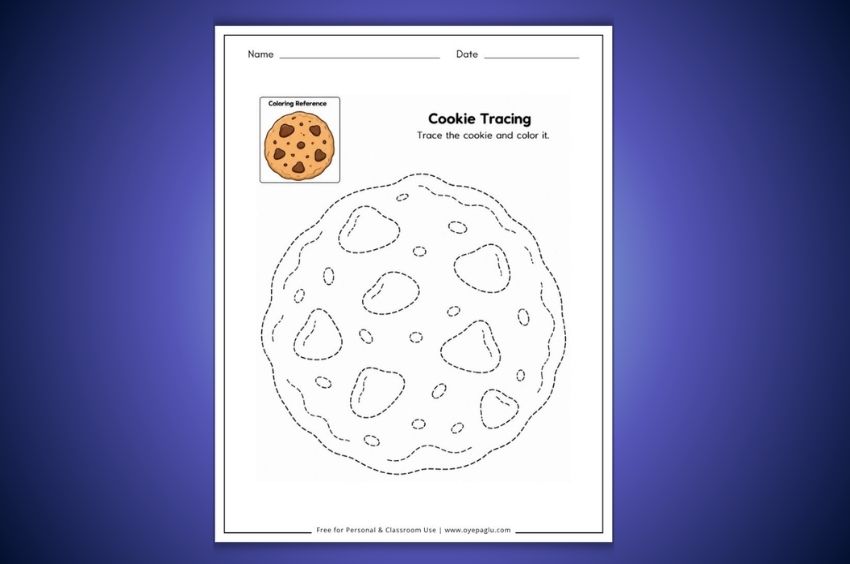
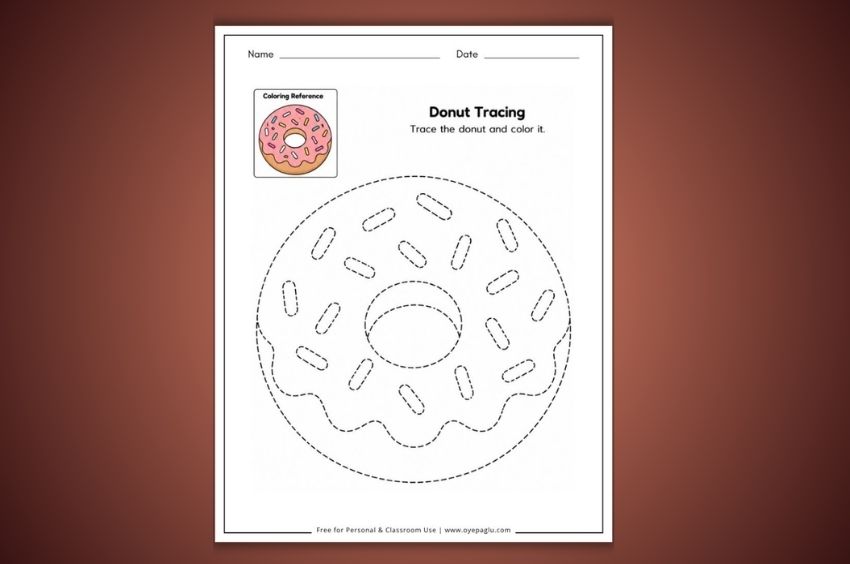
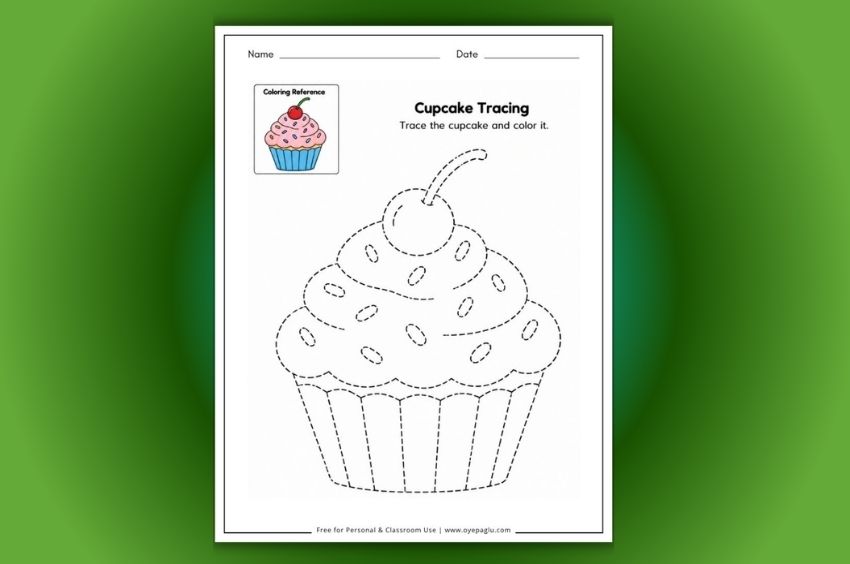
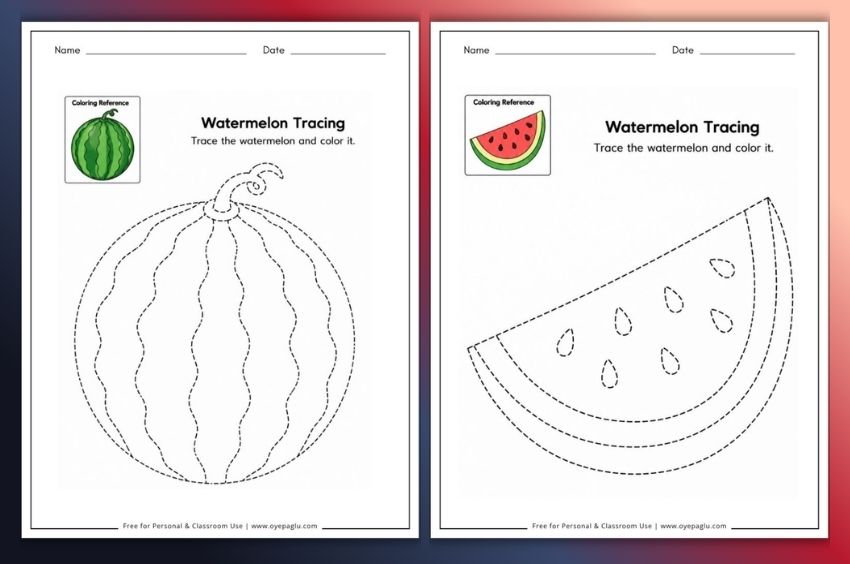
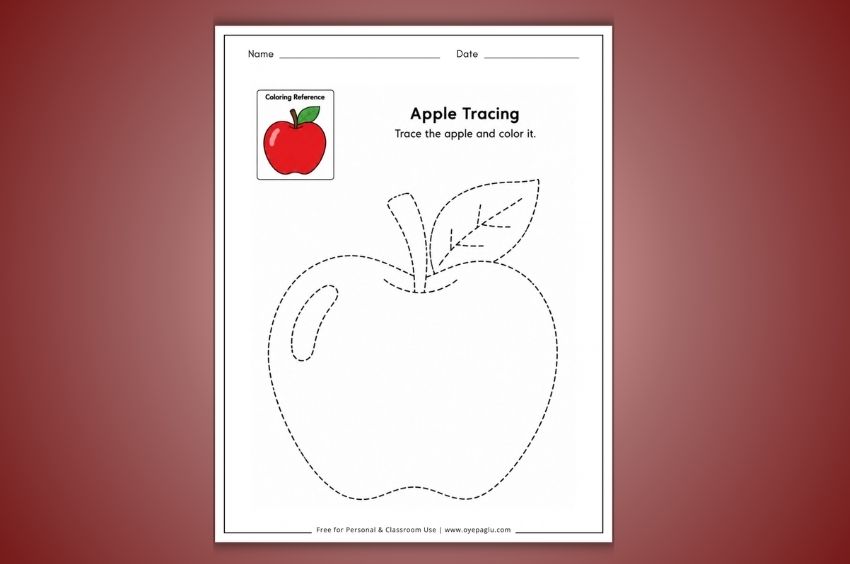
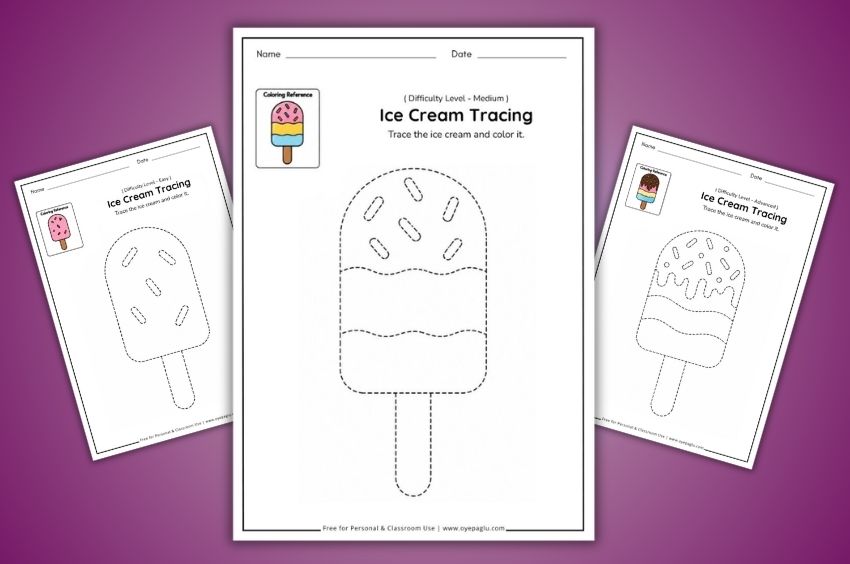
Young children need plenty of practice before they’re ready to form letters and numbers. These free line tracing worksheets for kids give preschoolers and kindergarteners simple, structured practice with straight lines, curves, zigzags, loops, and paths.


How This Worksheet Builds Key Early Learning Skills
Line tracing may look simple, but it gives young children several skills they will use when they start writing.
- Fine motor control: Following a dashed line helps children practice moving a pencil with control instead of making large, uncontrolled strokes.
- Pencil control: Straight, curved, wavy, and zigzag patterns require different hand movements. Repeated practice helps children become more comfortable holding and guiding a pencil.
- Hand-eye coordination: Kids have to watch the path while moving their pencil along it. That connection between what they see and what their hand does is an important early writing skill.
- Visual tracking: Tracing from one side of the page to the other encourages children to follow a path in an organized direction.
- Direction changes: Zigzags, sharp turns, loops, and mixed patterns give children practice changing direction without lifting the pencil unnecessarily.
- Focus and attention: A child has to slow down and pay attention to the path rather than simply drawing across the page. Short tracing activities can be a useful way to build this habit.
- Pre-writing readiness: These patterns give children experience with the kinds of controlled strokes they will eventually use when forming letters, numbers, and basic shapes.
Don’t worry if the first few attempts aren’t neat. At this age, control develops through repetition. A child who goes off the line today may stay much closer to it after a few more practice sessions.
How to Use These Printables in the Classroom or at Home
You don’t need a complicated lesson plan for line tracing. A few minutes of focused practice can go a long way.
- Add them to a morning work tub. Print a few different pages and keep them in a folder or tub. Children can choose one to complete when they arrive or during independent work time.
- Laminate for reusable practice. If you want to use the same worksheets more than once, laminate the pages and let children trace the paths with dry-erase markers. Wipe them clean and use them again later.
- Use them at a fine motor center. Put two or three tracing pages at a center with pencils, crayons, or dry-erase markers. Start with straight lines and gradually introduce curves, zigzags, loops, and mixed patterns.
- Make it a short home activity. You don’t have to finish a whole page in one sitting. One or two rows at a time is plenty for a young child who is still developing pencil control. Keep the activity relaxed and praise careful effort rather than perfect tracing.
For younger preschoolers, thicker pencils or crayons can sometimes be easier to control. As children become more comfortable, regular pencils provide a good next step toward handwriting practice.
Frequently Asked Questions
What age are these line tracing worksheets best for?
They are a good fit for preschoolers and kindergarteners, generally around ages 3–6. Younger children can start with simple horizontal and vertical lines, while older preschoolers can move on to curves, zigzags, loops, and mixed patterns.
Should I print these worksheets on US Letter paper?
Yes. For US classrooms and homes, US Letter paper (8.5 × 11 inches) is the standard choice. If you’re printing an A4 version, make sure your printer is set to the correct paper size and use the “fit to page” option if needed.
What should my child use for tracing?
A pencil is a good choice when the goal is pencil control and pre-writing practice. Crayons can work well for younger children, and dry-erase markers are convenient when using laminated copies for reusable practice.