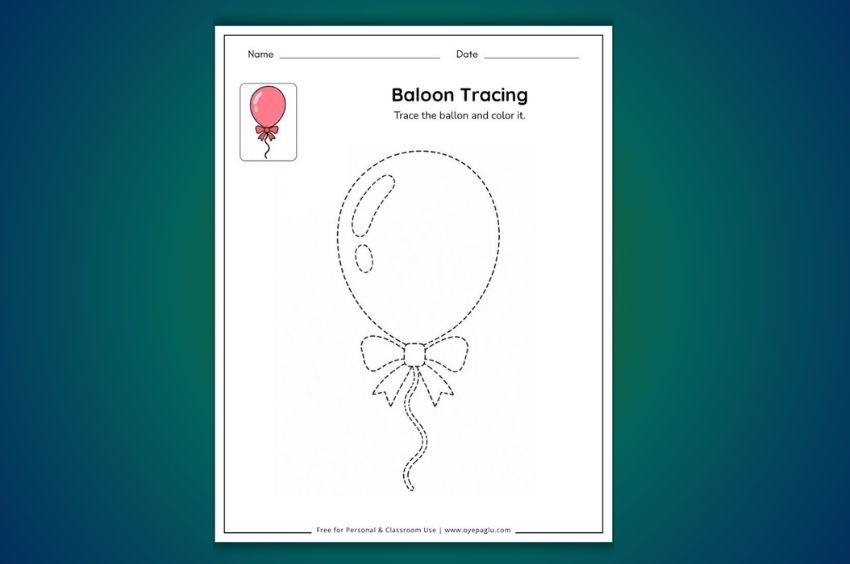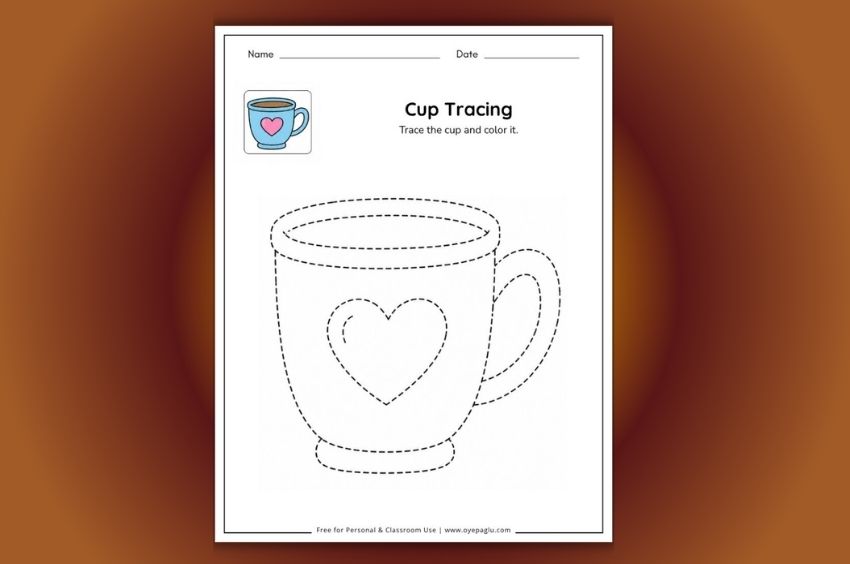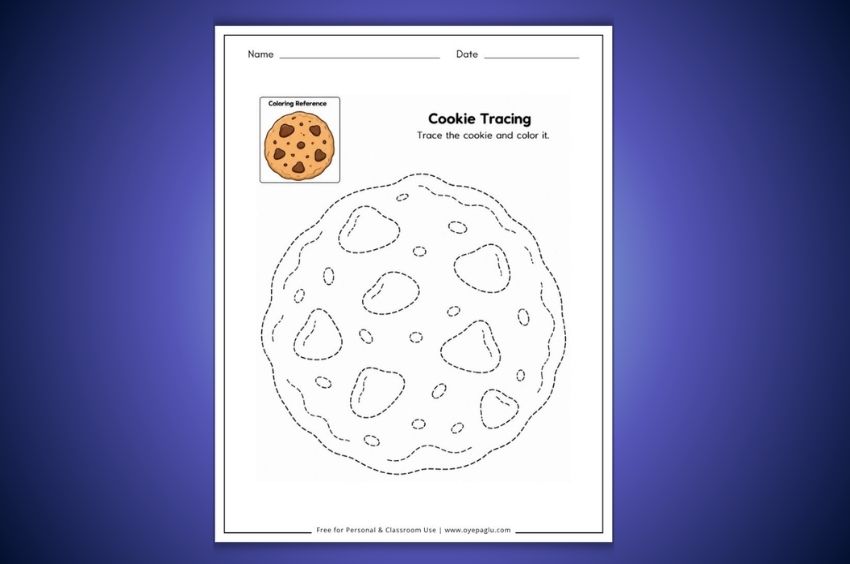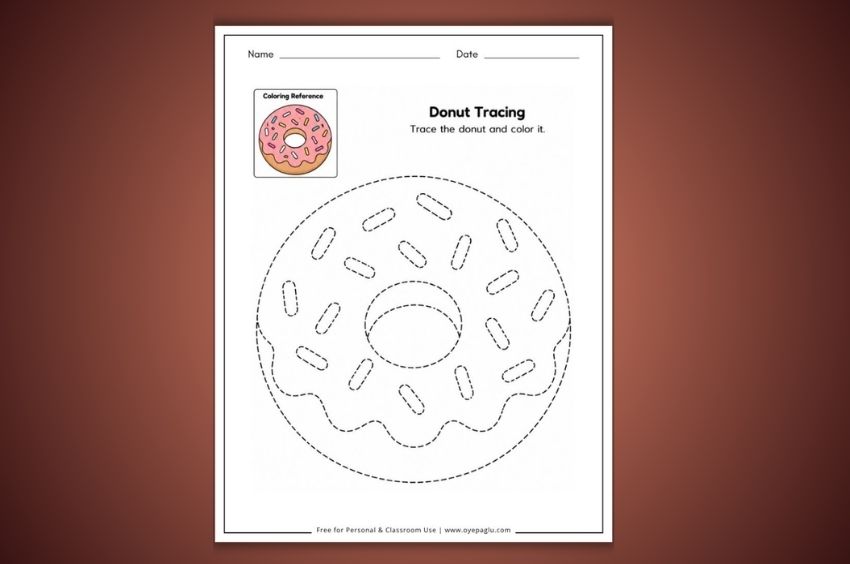
Ice cream is an easy theme to bring into a preschool activity. Kids already know the shape of a popsicle, and the simple outline gives them something familiar to trace.
These ice cream tracing worksheets are made for preschool and kindergarten children who are practicing pencil control, fine motor skills, and early pre-writing movements. The set includes three levels, so you can start with a simple popsicle and move to a more detailed design when your child is ready.
Each page also has a small Coloring Reference in the corner. Children can look at the colored popsicle for ideas and then color their own worksheet after tracing.
Free Ice Cream Tracing Worksheets
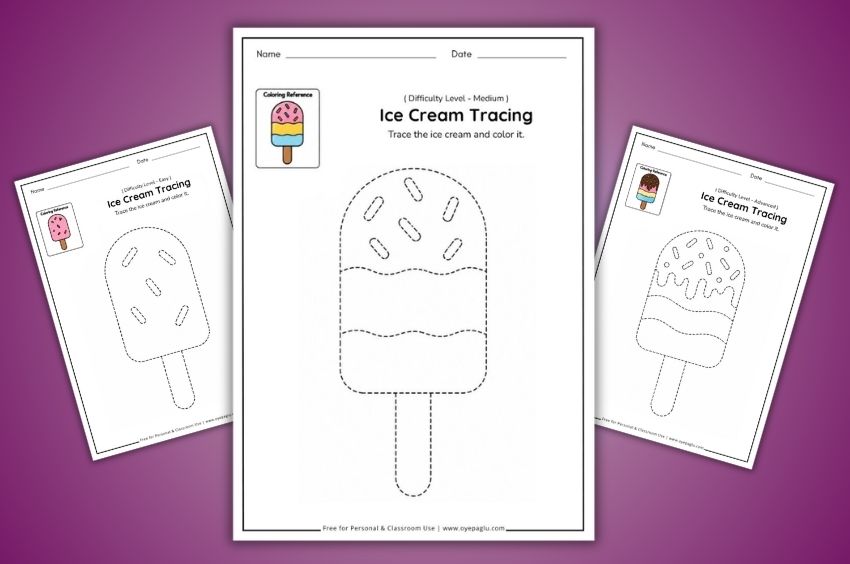
This set includes three popsicle tracing worksheets: Easy, Medium, and Advanced. Each one adds a little more detail while keeping the activity manageable for young children.
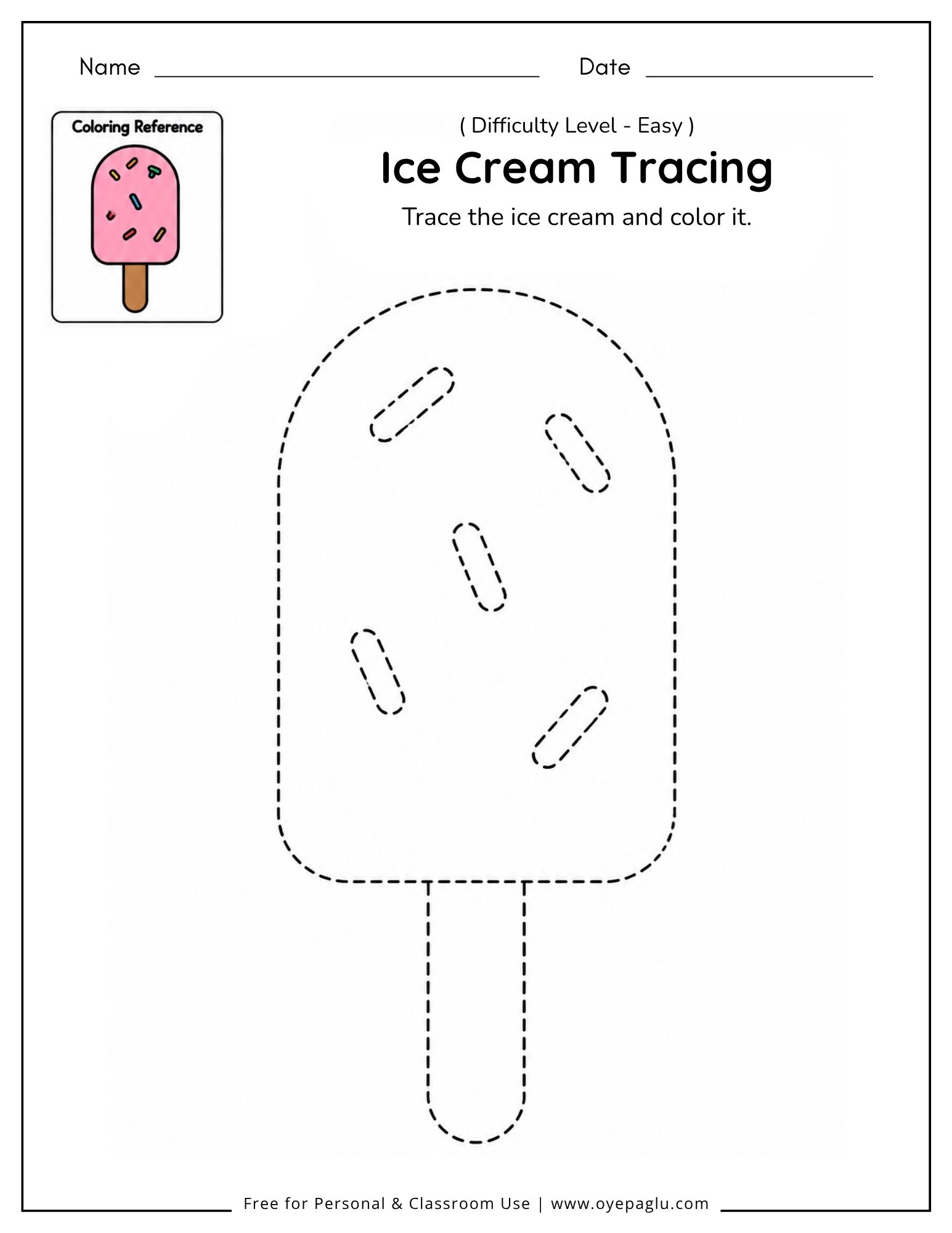
1. Easy Ice Cream Tracing Worksheet
The Easy worksheet is a good place to start.
It features one large, simple popsicle with a rounded top, a stick, and a few small sprinkle shapes. The main outline is made with dashed lines, giving children a clear path to follow.
The instruction is:
“Trace the ice cream and color it.”
This page works especially well for younger preschoolers who are getting comfortable holding and controlling a pencil or crayon.
There is plenty of open space around the popsicle, so children can focus on the tracing without a crowded page.
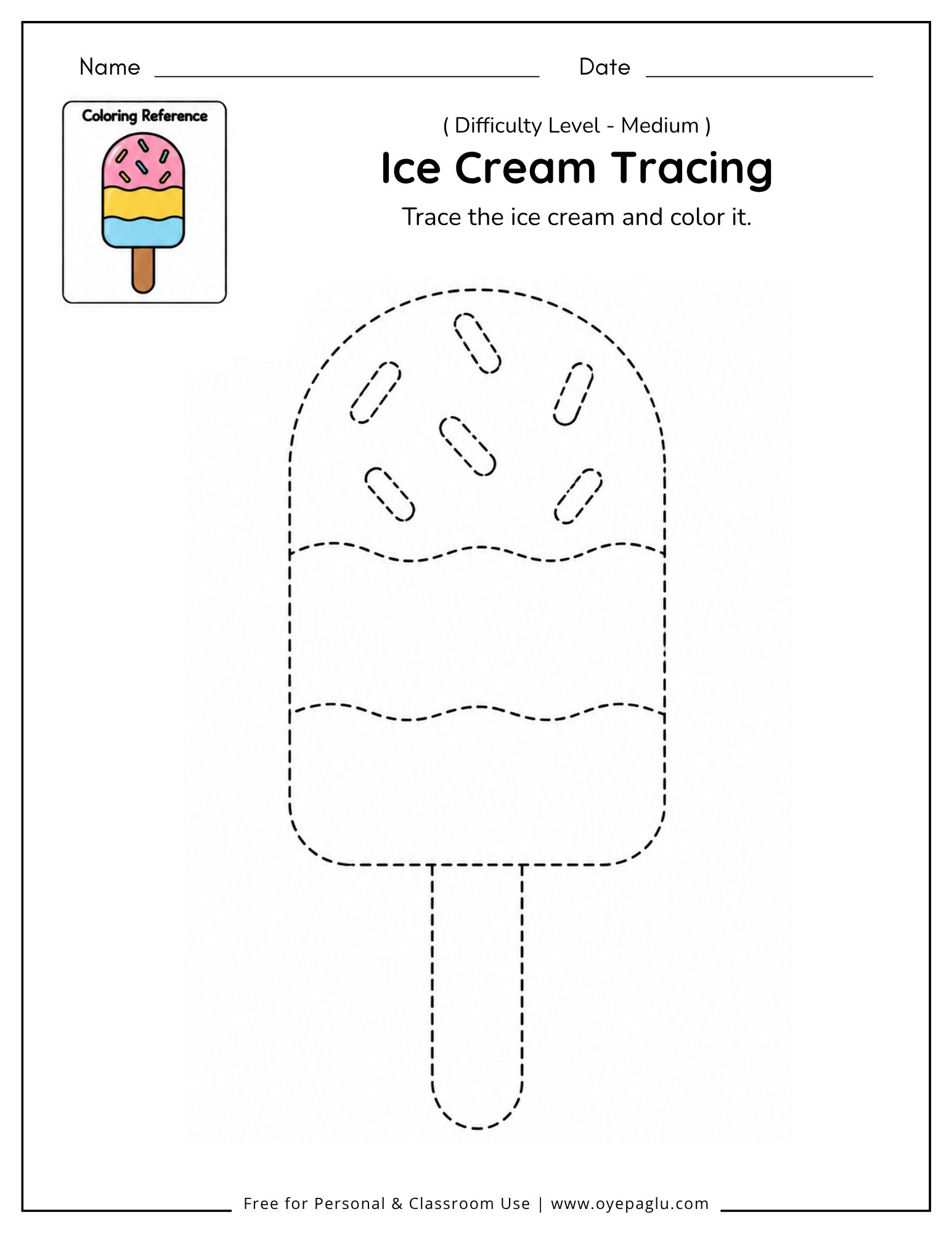
2. Medium Ice Cream Tracing Worksheet
The Medium worksheet adds a little more to the activity.
The popsicle has simple wavy sections across the ice cream. These sections give children extra lines to trace and also create separate areas that they can color differently.
There are also several sprinkle shapes inside the popsicle.
After tracing, children can use different colors for the sections. For example, they might use pink for one area, yellow for another, and blue for the next one.
This makes the worksheet a little more challenging than the Easy page while still keeping the shapes large and simple.
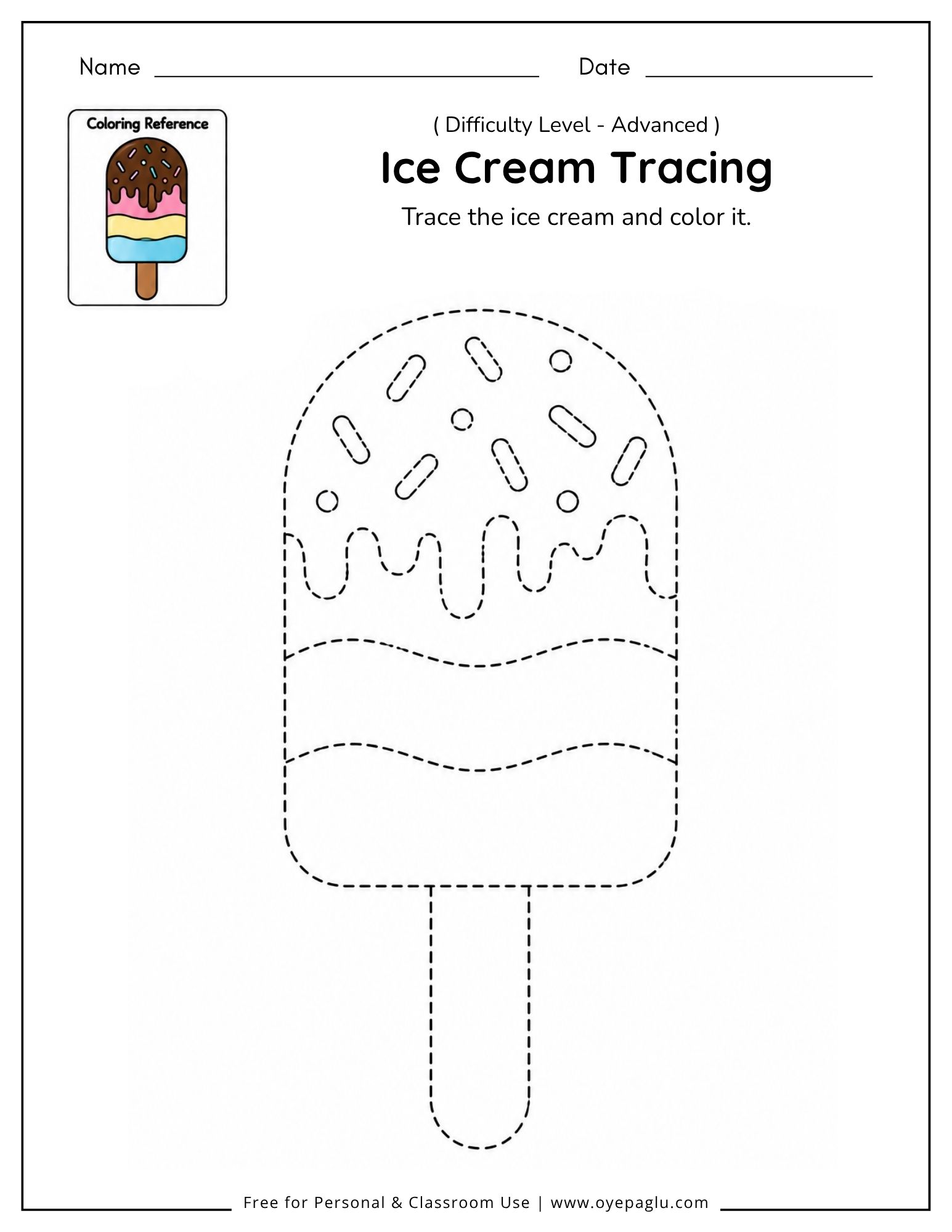
3. Advanced Ice Cream Tracing Worksheet
The Advanced worksheet includes more details for children who are ready for additional tracing practice.
The popsicle has a wavy topping, several sprinkle shapes, and multiple sections to trace and color. The extra lines require children to pay a little more attention as they move their pencil around the different parts of the design.
It is still a simple ice cream shape, but there is more tracing involved than on the first two pages.
This makes it a useful next step after a child is comfortable with the Easy and Medium worksheets.
What Skills Do These Worksheets Practice?
Tracing an ice cream shape may look like a simple activity, but young children are working on several useful skills while completing the page.
Pencil Control
Children need to keep their pencil close to the dashed line as they trace around the popsicle. This gives them practice making controlled movements instead of moving the pencil randomly across the page.
Fine Motor Skills
Tracing involves small hand and finger movements. Regular practice can help children become more comfortable with the type of control they will later use for drawing and writing.
Following Curved Lines
The rounded top and sides of the popsicle give children practice following curved lines. The wavy sections on the Medium and Advanced worksheets add another type of movement.
Pre-Writing Practice
Young children do not need to start with letters right away. Simple shapes and tracing paths give them a chance to practice pencil movements before more formal handwriting activities.
Let Kids Trace and Then Color
One nice thing about these worksheets is that the activity does not have to end when the tracing is finished.
After tracing the dashed lines, let your child color the popsicle.
The small Coloring Reference gives them an example of how the finished ice cream could look. They can follow those colors or choose their own.
For example, a child might make the popsicle pink with colorful sprinkles. Another child may choose blue, yellow, or green.
There is no need for every child to color it exactly like the reference.
How to Use These Worksheets at Home
You can use these pages as a short activity at a kitchen table, during quiet time, or as part of a simple pre-writing routine.
Start with the Easy worksheet if your child is new to tracing. Give them a pencil or crayon and let them work through the outline at their own pace.
Once they are comfortable with the first page, try the Medium worksheet. The additional sections give them more lines to follow and more areas to color.
The Advanced page can come next when your child is ready for more detailed tracing.
There is no need to finish all three worksheets in one sitting. Young children often do better when the activity stays short and enjoyable.
Using Ice Cream Tracing Worksheets in the Classroom
These worksheets can also fit easily into a preschool or kindergarten classroom.
Place them at a fine motor center, use them during morning work, or keep them available for a quiet table activity.
The three levels can also be useful when children in the same classroom have different levels of tracing experience.
One child may work on the Easy page while another is ready for the Medium or Advanced worksheet. They are still practicing the same basic skill, just at different levels.
The coloring reference also makes the pages useful for a short coloring activity after the tracing is complete.
A Simple Way to Guide Your Child
If your child is new to tracing, show them how to follow the dashed line slowly.
You can point out where the tracing path begins and encourage them to keep their pencil on the line as they move around the shape.
Try not to correct every small mistake. A child may go outside the line or skip a small section, especially when they are still developing pencil control.
The goal is practice.
With time, their movements usually become more controlled and confident.
Choosing the Right Difficulty
You do not have to choose a worksheet based only on age.
Watch how your child handles the tracing.
Easy: A good starting point for children who are new to tracing.
Medium: Works well when a child is comfortable with simple outlines and is ready for additional sections.
Advanced: Better for children who can already follow basic tracing paths and are ready for more details.
A child who finds the Advanced page frustrating can always go back to the Medium worksheet. That is completely fine.
Printing the Ice Cream Tracing Worksheets
These worksheets are designed with a clean layout and plenty of white space, making them suitable for regular home or classroom printing.
For standard printing, use US Letter paper (8.5 × 11 inches). You can also print the worksheets on A4 paper.
Regular white printer paper works well for tracing with pencils, crayons, or colored pencils. If you want to reuse the pages, you can also print them on heavier paper.
For the clearest results, print at actual size so the large tracing shapes remain easy for young children to follow.
Who Can Use These Ice Cream Tracing Worksheets?
These worksheets can be useful for:
- Preschool children
- Pre-K learners
- Kindergarten children
- Parents doing activities at home
- Preschool and kindergarten teachers
- Homeschool families
- Fine motor practice centers
They are especially useful when you want a quick activity that combines tracing and coloring on the same page.
Final Thoughts
These ice cream tracing worksheets keep pre-writing practice simple and familiar. Children get a large popsicle shape to trace, a few details to work on, and a chance to color the finished picture.
Start with the Easy worksheet, move to Medium when your child is comfortable with additional lines, and try Advanced when they are ready for more detail.
The colored reference in the corner gives children a little visual inspiration, but they are free to make their popsicle any color they like.